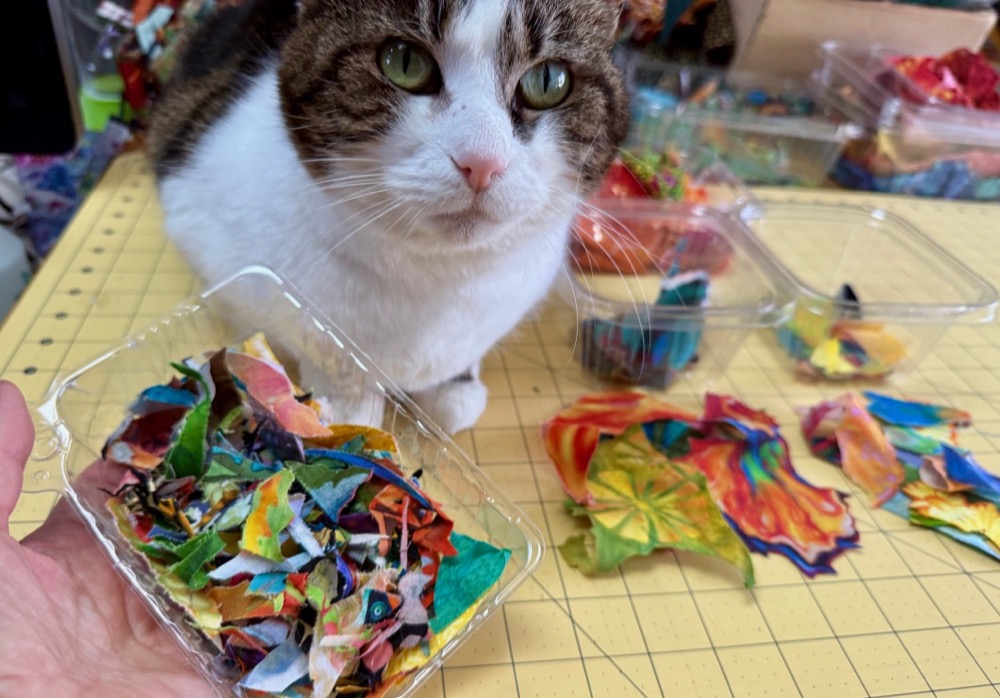
I’m not sure that people take me seriously when I say “No scrap is too small to save!” They’ll pick up a pinkie-fingernail-sized piece of fabric and say, “Surely you don’t mean this small…”
But I do mean it.
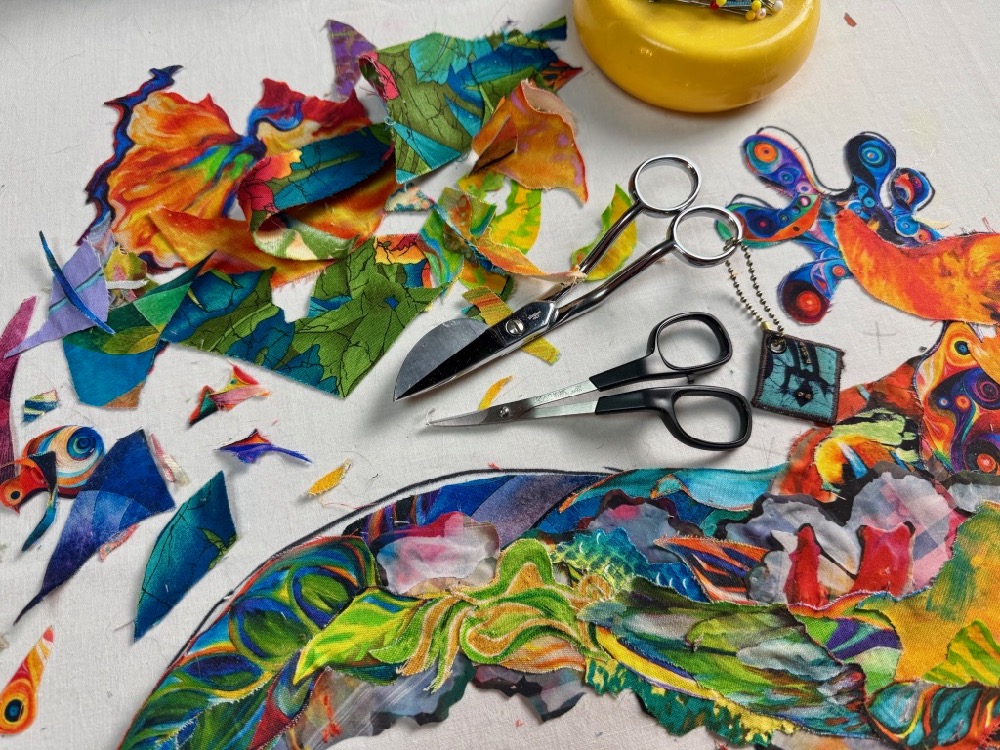
When I teach a class at a hotel or other venue, I will ask the cleaning staff to NOT vacuum the floor in our workroom—so that my students will have the opportunity to salvage those little cutoffs that fall to the floor. And before the end of the class week, they almost always find exactly what they need, at their feet, for a small touch up here or there on their collage.
Top Tip:
Store tiny scraps in small plastic bins from the grocery store.


Once you are done with that potential need, I grudgingly give you my permission to do with the tiny bits as you please. If you must throw them away in order to maintain your inner peace, you have my blessing.
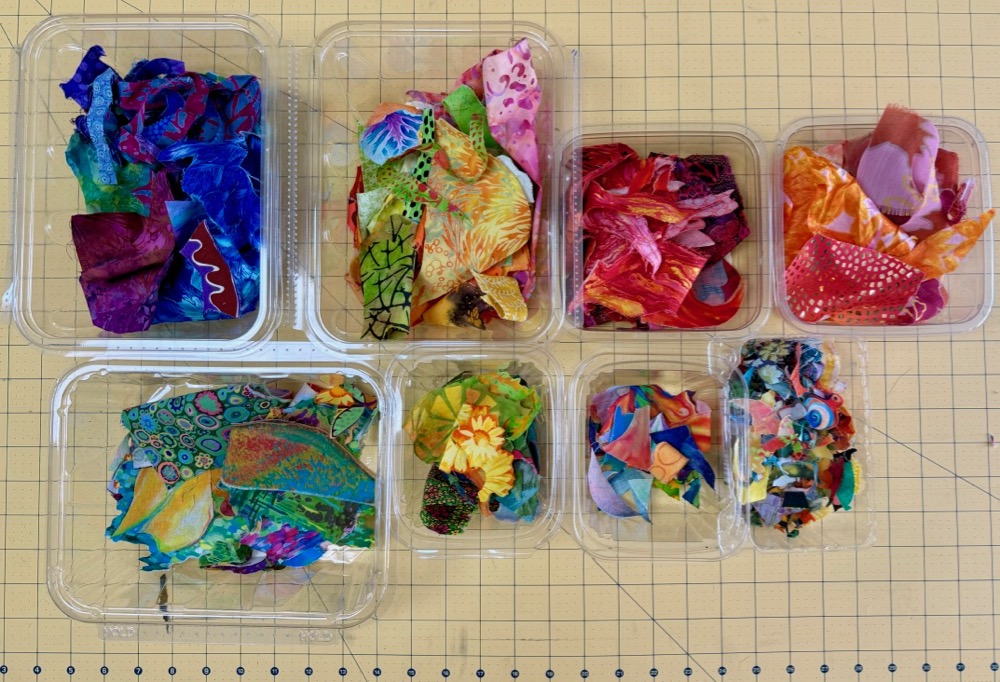
But how do you save and organize those tiniest scraps if you so desire? This was a question posed to me by super-collage-quilter Grace Crocker. We were on Zoom together during a coaching session and when she asked that, I held up a little plastic bin I was using to store the cutoffs from my current project. It was a small plastic container like the ones berries come in at the grocery store.
Grace responded, “Well, that would be a good thing to show people.”
So here we are.
Top Tip:
Store tiny scraps in small plastic bins from the grocery store.
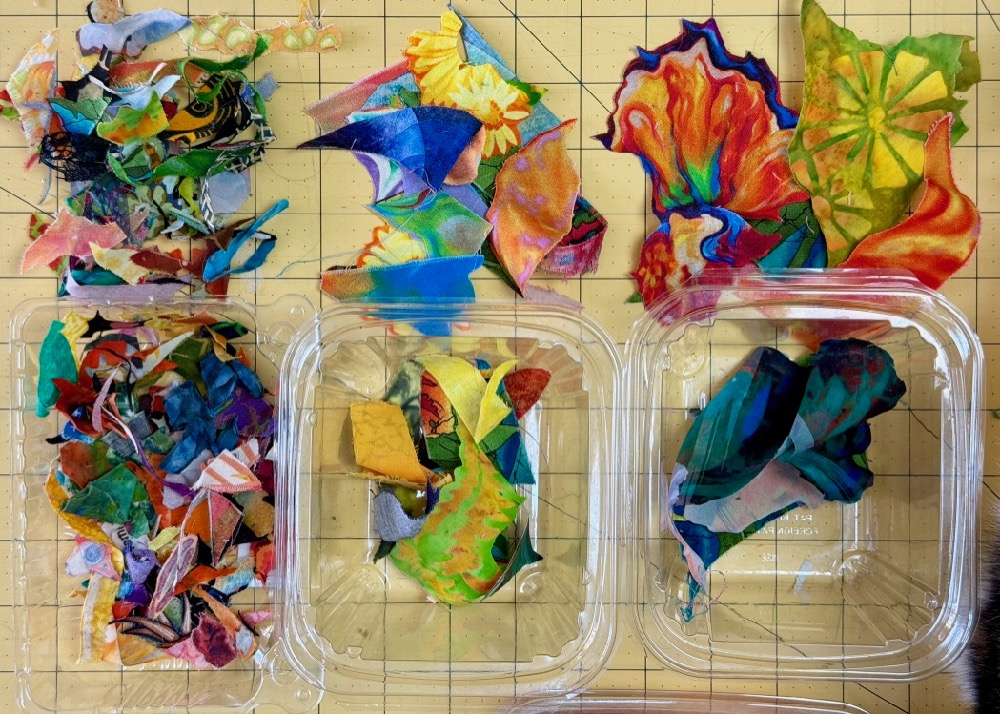
These plastic bins work great because they hold plenty of fabric bits—just right for the leftovers of most individual projects. They’re also practical if you do intend to save small scraps—they stack well and are clear so you can see at a glance what they contain. And of course I’m pleased that I can easily and immediately re-use containers such as these instead of tossing them in a bin, even if it’s for the eventual purpose of recycling (which is still a good alternative).
Glorious Gecko Follow Along for February 2026
Sign Up Now—through the end of the month—and Receive All Video Recordings


Susan Carlson Glorious Gecko Follow Along
February 5, 12, 19, and 26—7:00 p.m. EASTERN TIME
Cost: $95
REGISTER HERE
Typically each evening presentation (7 pm Eastern Time) runs about an hour and half. As with all our Thursday Night sessions, a recording link will be emailed the next evening to all registrants to review or watch later if you cannot join us live.
Each week via Zoom, I’ll be giving a live demo with Q&A as I gradually take you from beginning to end of a Glorious Gecko collage. You are invited to “follow along” if you wish, or you may simply want to watch as my piece progresses. I start off with a slide show to get you caught up on the progress I’ve made the previous week, I then work live as I progress to the next step, talking through my thought process and creative decisions while demonstrating the technique.
As a registrant you will receive a code for a free gecko pattern from my online shop to follow along as you play with your own fabric stash—but you are welcome of course to use your own gecko design, or just “go with the flow” of your fabric. In between the Thursday sessions, you can apply the steps covered to your own gecko collage.