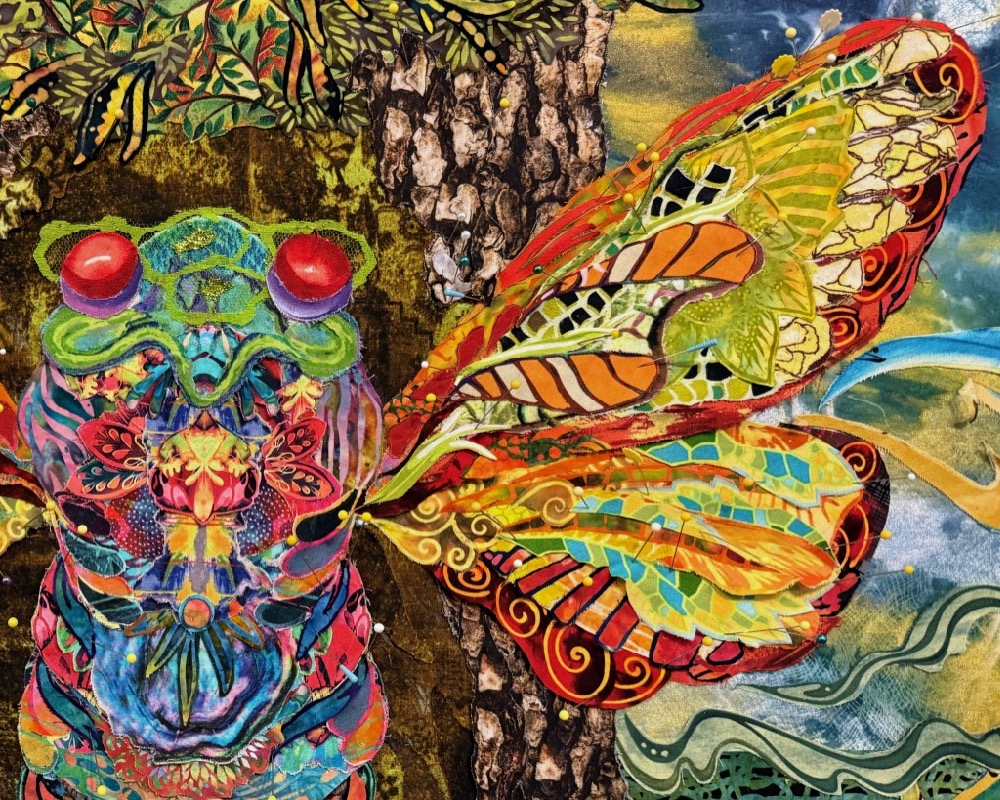
For years, I’ve told my students that getting the first draft of a collage project done would be the longest of the three drafts I talk about. An easy definition of a first draft: when your foundation fabric is obscured by the fabric pieces you’ve collaged—the first pass at defining your subject and background.
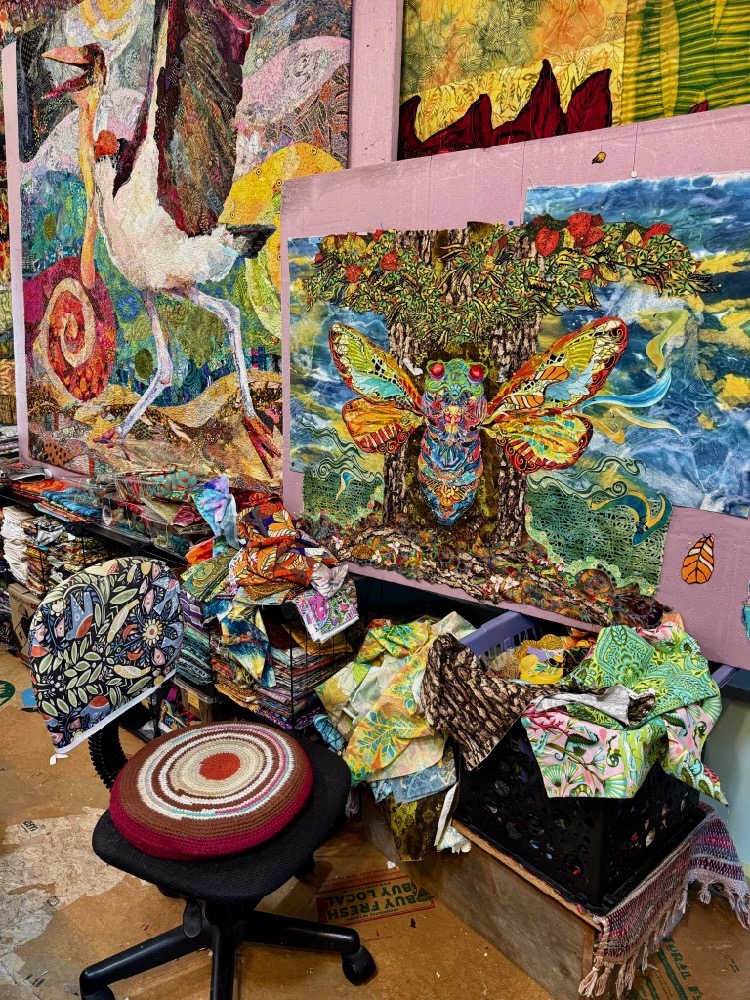
This summer, I kept open a stretch of time to get back to my own artwork, specifically a few projects that were set aside after their first drafts were done—subjects and backgrounds in place, but still second and third drafts to come. The second draft is to “fix up what I’ve put down” (such as the wing in photo above), the third draft is to “wiggle every tooth” to see if everything is as I’d like it to be, or not—the final touches. Working in drafts helps to compartmentalize the steps of the fabric collage process. Here’s a post I wrote about drafts, a concept I learned about from Anne Lamott in her book, Bird by Bird.
Two weeks ago, I began working on the first of my “second-draft projects” with a cicada portrait begun exactly two years ago. It now has me wondering about what I’m telling folks about drafts since I’m still working through the second draft—already about half the time that was spent on the first draft.
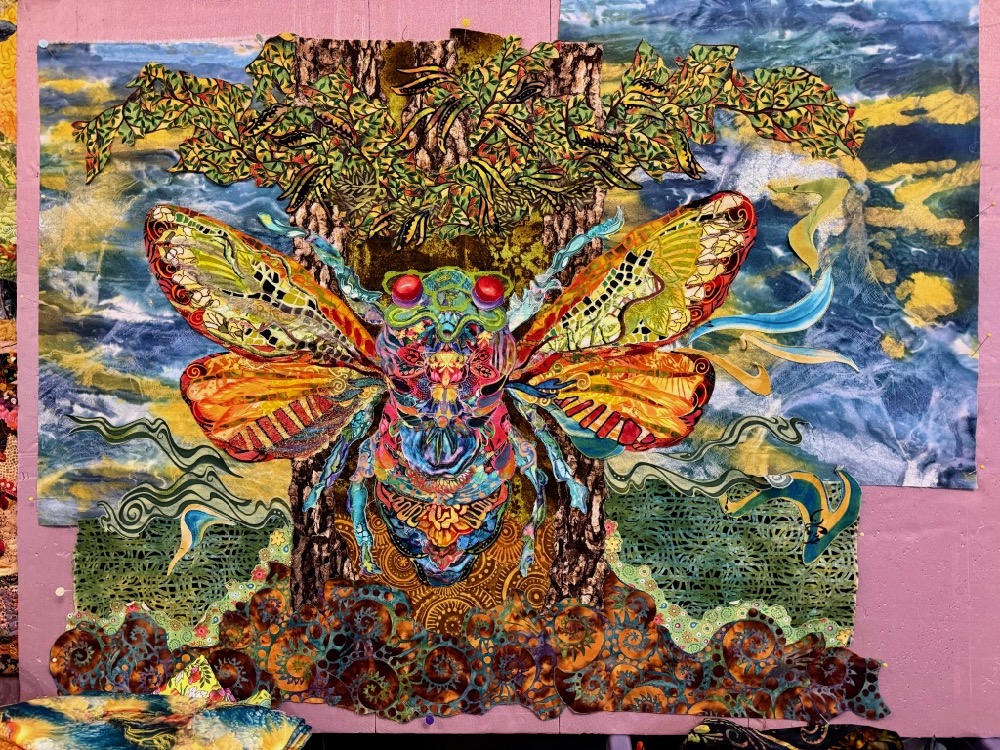
Though I did expect to be done with the cicada’s second draft this week, I have been enjoying going a little slower and getting immersed in it again. Getting immersed means that I loose track of time—”forgetting” lunch, dinner, and sleep—not all of them every day, but when Tom doesn’t see me for awhile he may come out to my studio and check on me, or text.
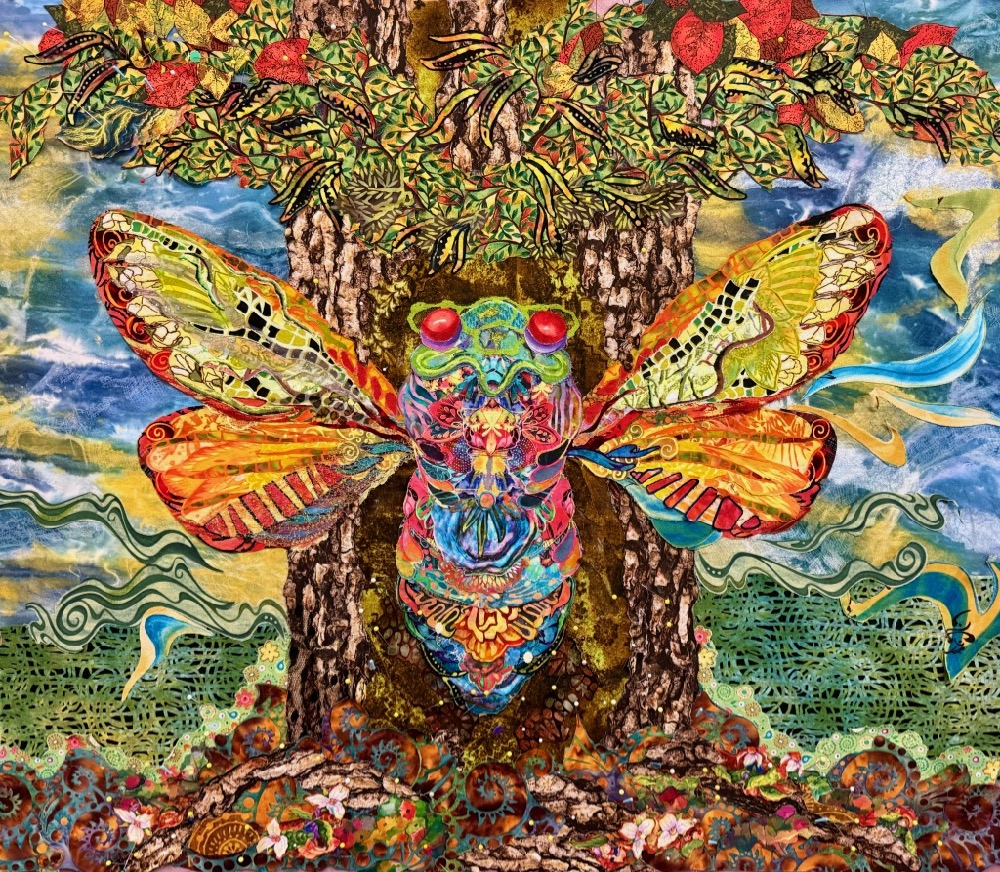
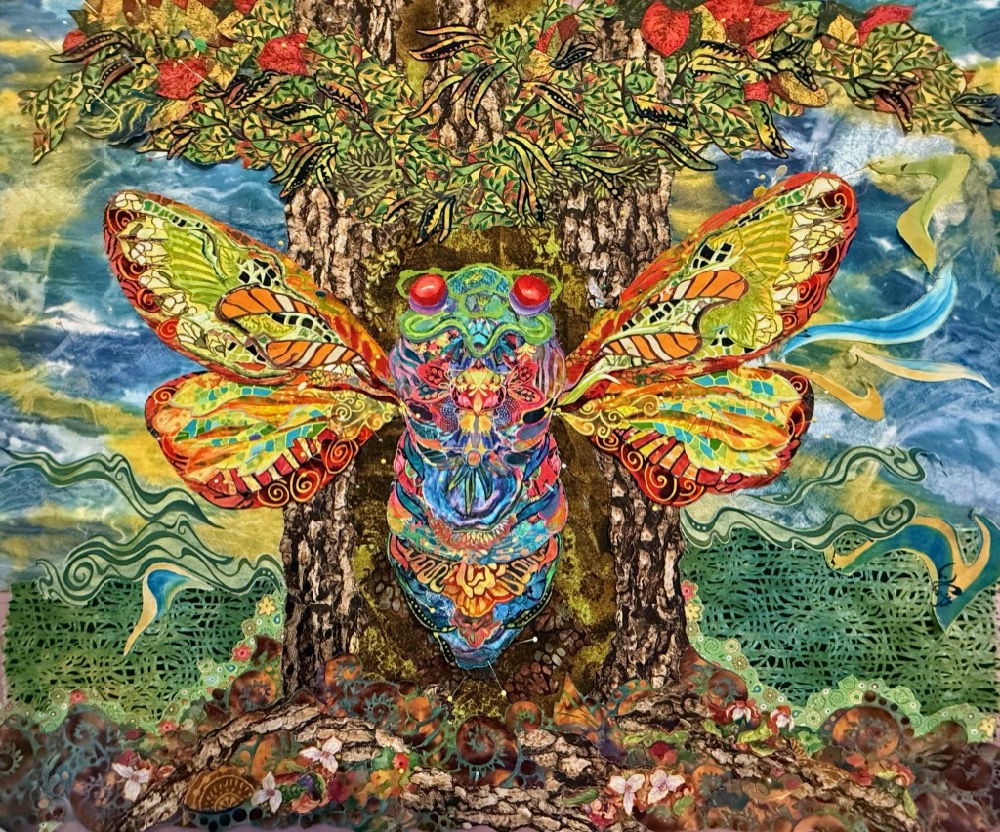
In last week’s post I showed where I began the second draft—by adding to the tree canopy and preparing to edit the tree bark by (temporarily) removing her legs. The photos below, are where this week’s second draft began and ended with edits made to tree bark, roots, and wings.


Click on any of the smaller photos to view them larger and to scroll through the photo galleries.
Second Draft, Continued
One thing I did this week in my studio was to watch and listen to the four recordings from my Fascinating Bugs and Butterflies Follow Along from 2024. This Follow Along was an online class that invited attendees to create their own bugs or butterflies (or to use my specially designed winged cicada pattern) as they followed along live via Zoom, for four Thursdays of class. It was interesting to follow along myself as I revisited the bug parts and background that I introduced two years ago.
The Tree


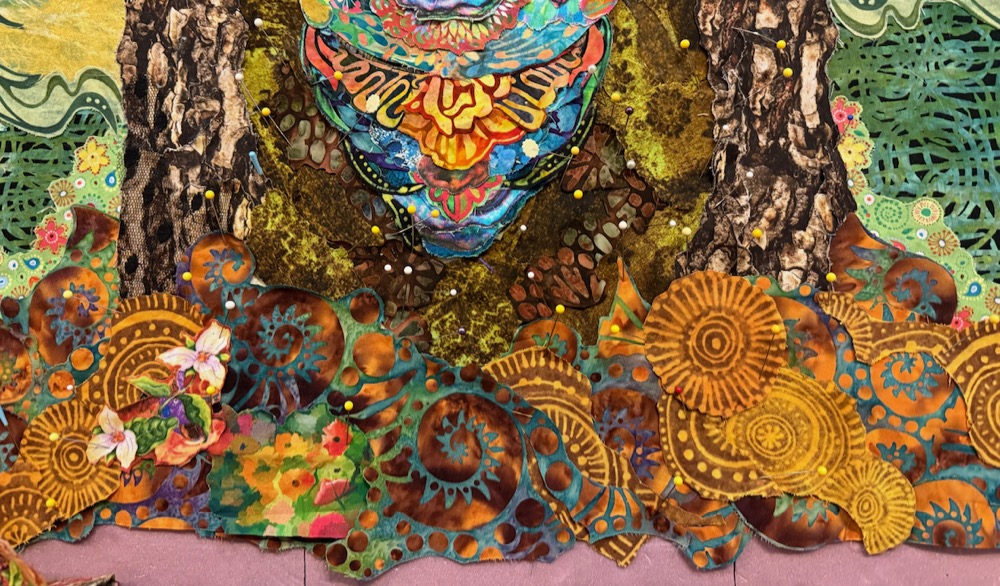
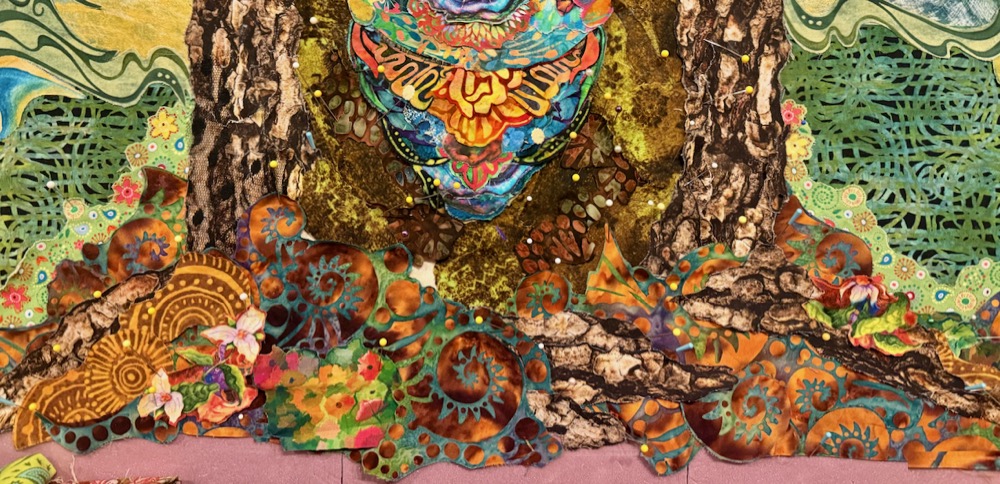
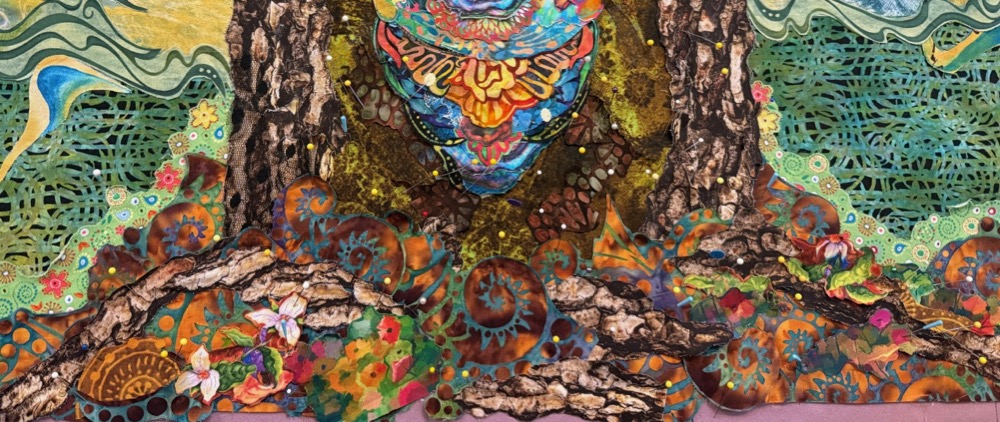
In last week’s post I was questioning the use of the golden circles fabric behind the cicada’s body—this week I did remove it for a fresh start in that shadowed area. The class recording that covered my choices for the background tree, reminded me that even though the tree bark fabric had been my first choice, it had too much variation in value and the cicada didn’t stand out well enough. Plainer, darker fabrics worked better.
I also told the audience how fond I was of the golden circle fabric, and I still am. So when I removed it from behind the cicada this week, I repurposed it as highlights on the tops of tree roots I had in mind to create as a base for the tree. That short-lived experiment is documented in the three photos below.
The Wings
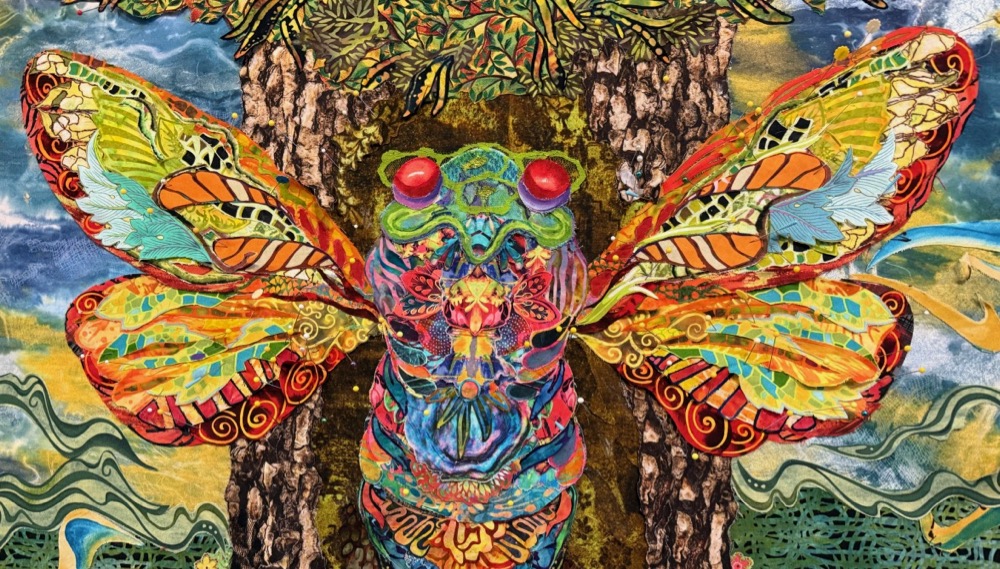
In the wing close-ups below, I removed glittery sheer fabrics seen in wing first drafts, above—primarily on lowest section of wing on our left. That little wing shape has now been re-collaged, below, with a repeat fabric of yellow spirals on red, seen at side edges of upper wings.


In the class recording I was reviewing, I discussed the fabric choices I made back then, but also kept stating how I wanted to bring out the red eyes and red outlines on the wings I saw in cicada photographs. So for this second draft, I added more red fabrics as edits—seen in the lower wing area, and beginning to be added on the upper wing edge on our right—yet to be added on the left.
By the way, when I set aside time to work on a piece and want to get immersed in it, I often pick an audio book to listen to. I find fiction a good choice since when my brain is occupied following characters and plot, it’s also letting go of evaluating every little bit of the collage I’m working on—allowing my intuition to kick in—inviting the Muse and “flow” to take over.
This week I re-listened to The Last Devil to Die, by Richard Osman—the fourth book in his series following the admirable sleuthing skills of four English seniors with very entertaining personalities. I’m now well into the second book of the week, Peace Like a River, by Leif Enger—a novel I’m looking forward to getting back to over the weekend—recommended to me by my friend of 63 years (thanks, Jet).
One Comment