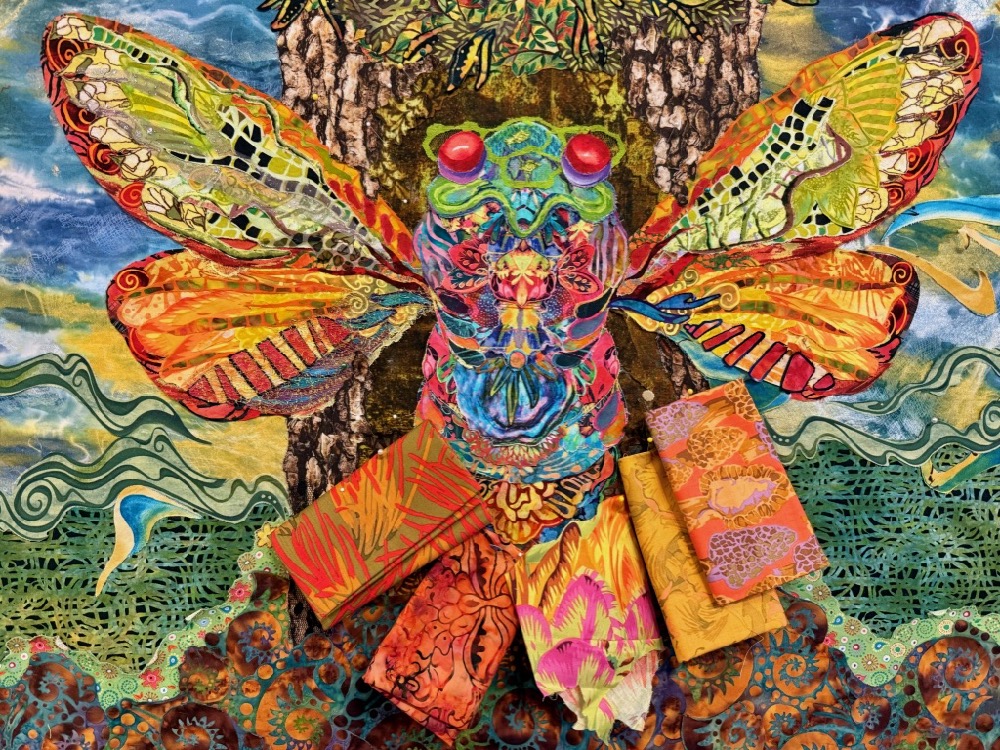
Though I have thoroughly enjoyed the five class weeks and numerous students I’ve taught so far this year, the beginning of this week opened a stretch of time that is available to work on my own art.
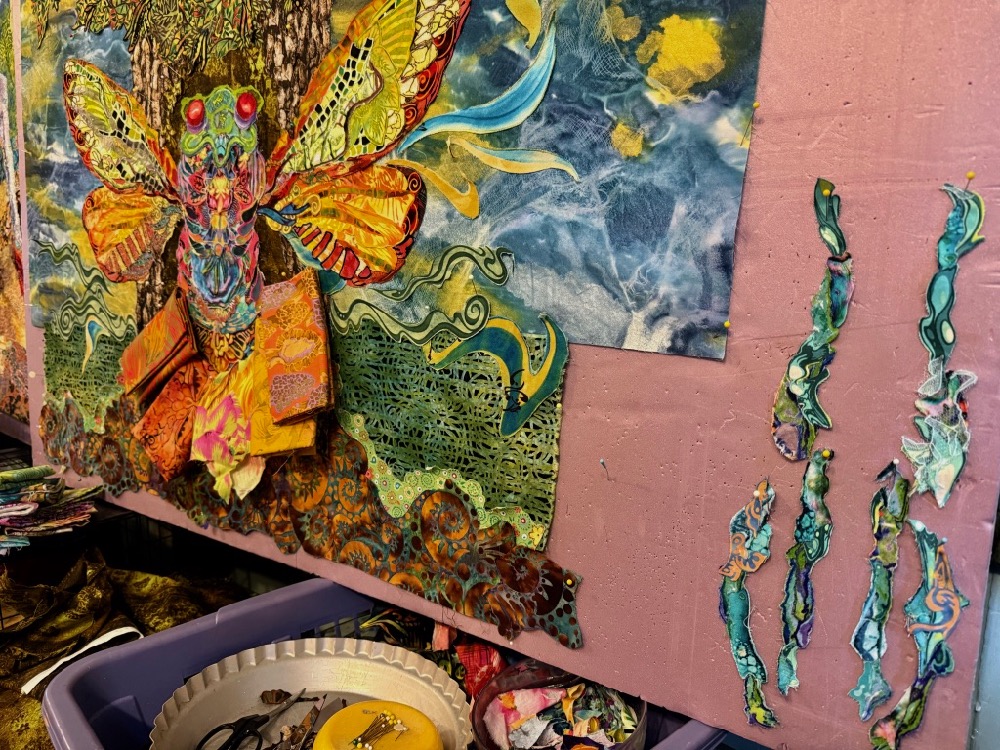
As I cleaned and tidied and rearranged my studio prior to my June Harpswell, Maine Retreat, I uncovered past projects begun but not finished. Some will remain as they are since I use them as in-progress class samples. Others however, I feel that their time to be finished has come—such as my cicada portrait above, begun two years ago in 2024. So that’s what I’ll be moving into as summer peaks in August and ends mid-September—revisiting and maybe even finishing a project or two—in my relatively tidied studio.
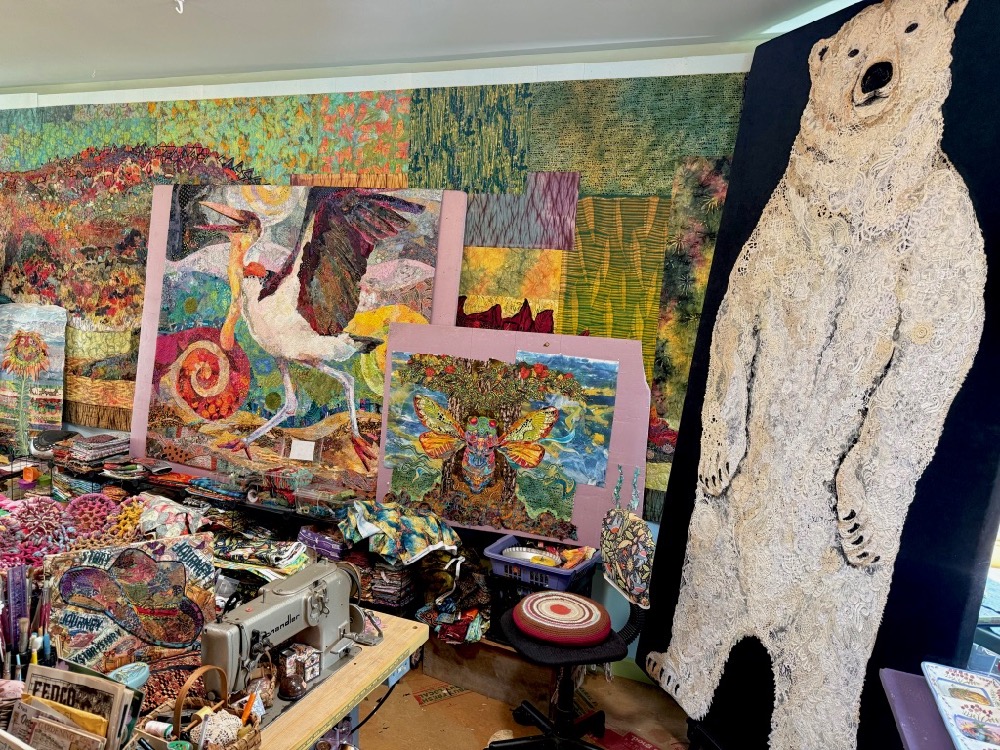


Click on any of the smaller photos to view them larger and to scroll through the photo galleries.
Let’s Return to the Summer of 2024 for a Moment
The spring and summer of 2024 was called Swarmageddon in parts of the US. According to a National Park Services article, in spring of 2024, “billions, if not trillions, of periodical cicadas emerged in a rare dual emergence event. This monumental occurrence took place when two separate groups emerged across the Midwest and southeastern United States. The next dual emergence of these cicada broods won’t be for another 221 years; in 2245!”
I grew up in the Washington, DC, suburbs of Maryland, and hearing and seeing cicadas meant “summer” to me. I always searched for their discarded shells clinging to the bark at the base of the big maple tree in our front yard. I guess its roots were a good spot to hibernate.
When I heard of the 2024 Swarmageddon, I wished to experience it, though Maine was not on the cicada’s emergence map. But, the cicadas did hold out long enough for me to catch the tail-end of the event in July, with a visit to the National Quilt Museum in Paducah, Kentucky, for my Specimens exhibit and to teach a class at the museum.
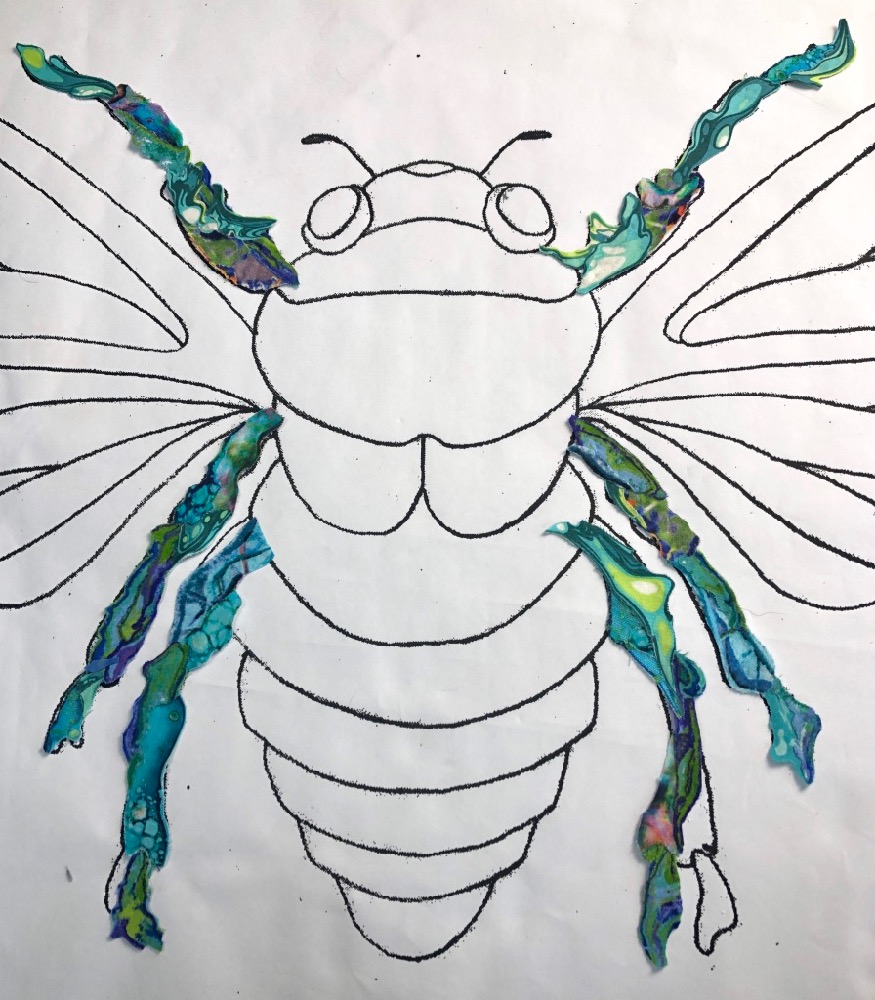
That August, I celebrated from Maine, with a special Fascinating Bugs and Butterflies Follow Along, featuring a specially designed winged cicada for attendees to use as they followed along online, for the four Thursdays of class.


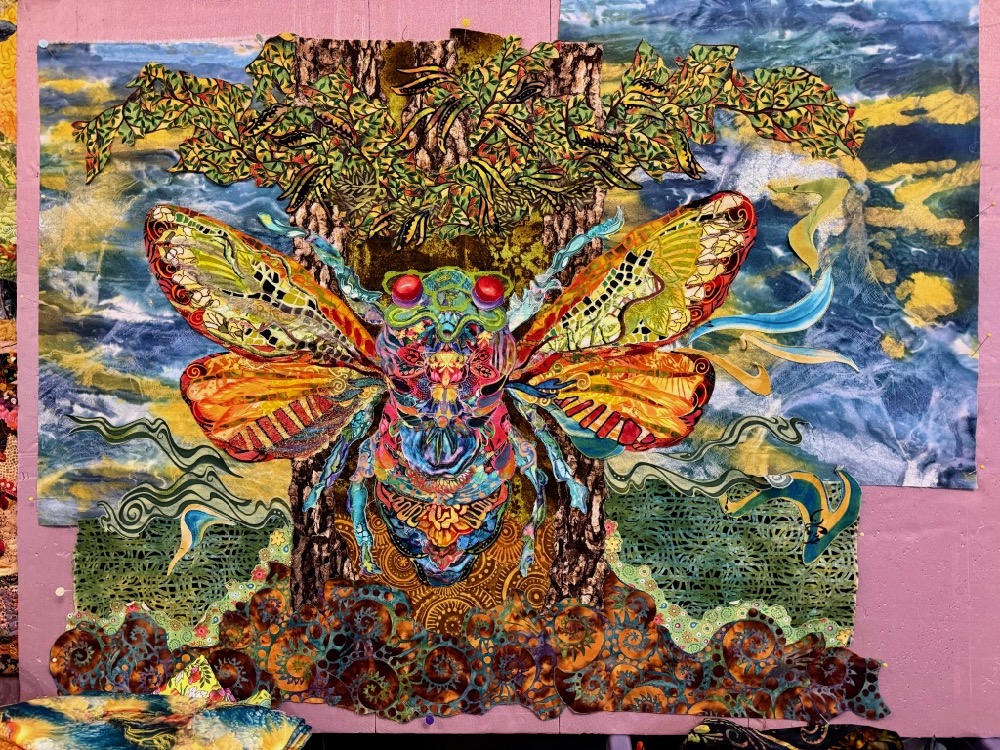
Above, I chose photos from each week of the 2024 Follow Along presentations to show the beginning and end of the first draft of the cicada collage.
Where to Start with the Second Draft?
I started easy with adding tree leaves to what will be the top of the collage, see photos below. You may notice that none of the four fabrics I’ve (so far) used for my tree’s leaves, are maple leaves—but they do fit my memory-story that includes the big weeping willow in the backyard and the autumn-colored leaves of the trees lining our street. The bigger red leaves I added seem to look a bit like red cicada eyes looking out from the branches. I find that an unexpected but interesting development. I think I’ll be leaving them for now.


Next, moving down the collage, I took a fresh look at the tree bark and the legs on top of the bark. Off and on over the two intervening years, I’ve had niggling doubts about the color of the legs, which at times looked to me like gaps in the tree with the sky looking through.
So in photo below left, I took the legs off—to see if I liked that better—and it’ll be easier to work on the tree bark. In photo below right, Djinni surprised me with a leap onto my lap, displaying her fine tail in the process.


As I tidied my studio the last few months, I spent hours (Tom even waded in one evening to help) folding and re-stacking yards and yards of fabric that I had pulled out and worked with to one extent or another in the last six years. Yes, I excavated a couple fabric piles from pieces I worked on in 2020. Which means that this past week, I had the pleasure of perusing my newly nice and neat shelved piles as I looked for any other tree-trunk-brown fabrics to add in this second draft.


This tree trunk has a cavity in it (another memory thing) and I softened those edges (above), but now I’m reexamining the golden circled fabric at the cicada’s tail end. I love that fabric and wanted to include it, but now I’m questioning it. I may need to “kill my darling,” as Stephen King says in his book, “On Writing”—sometimes you need to kill your darling to further the plot.
Super pretty