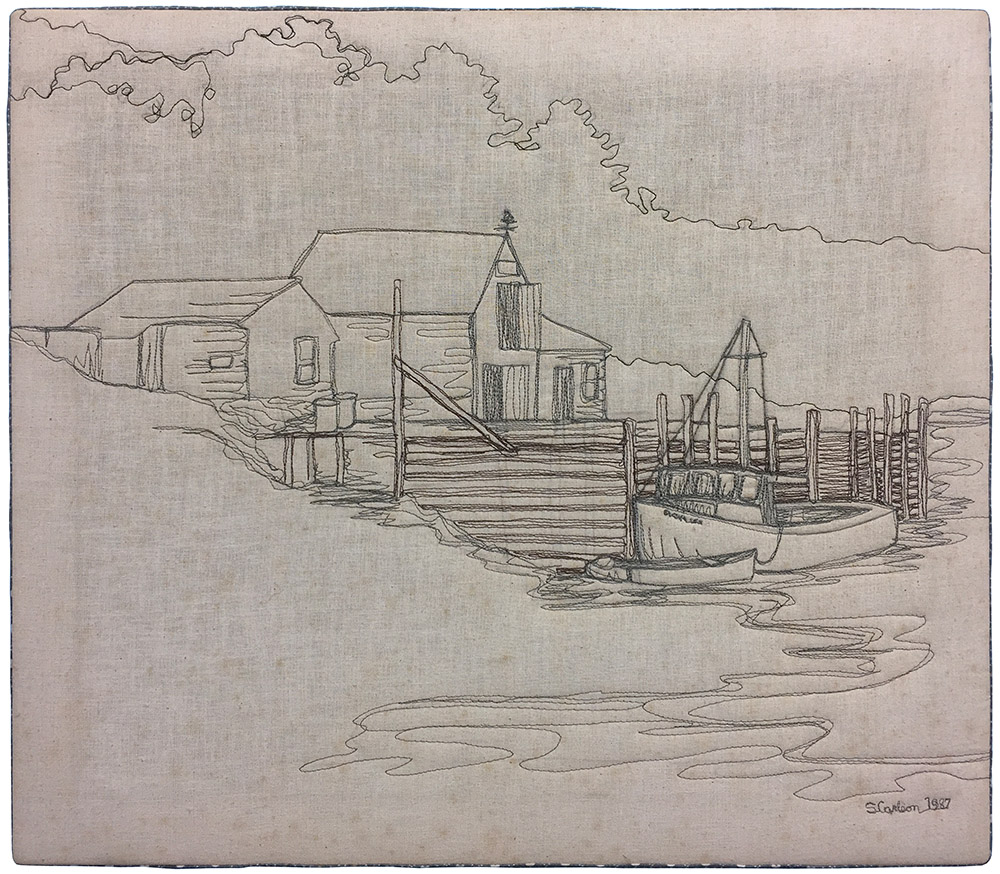
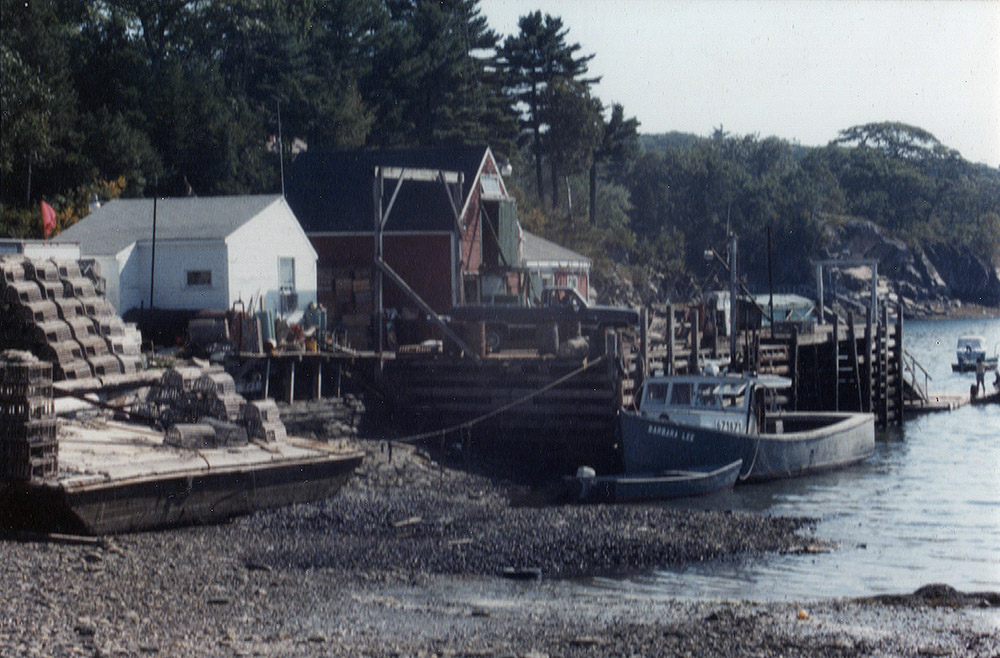
Thirty-two years ago this week, while visiting Maine (and still living in Maryland), I met and had my first date with my (future) husband, Tom. I met him at his family’s lobster wharf in Harpswell, Maine, pictured above. After a year of long-distance romance, I took a summer job in Harpswell and a small apartment in town to see if this Maine fellow was worth staying with. Kinda obvious what the verdict was.


It wasn’t all romantic sailboat dates (above left) with this fisherman’s son or hair-raising waitressing nightmares. In my spare time I kept busy with fabric art projects. This was the first time separated from my mom’s stash of fabrics, so my choice of materials was limited. Along with my portable Kenmore sewing machine and thread, I had some muslin, some denim, and a little wool on hand.
I’d done some “free-motion” quilting. I was creating simple stitched images onto muslin (see examples near the end of this post), which included yard-sale scraps of crazy quilts, teaching myself as I went. I’d heard free-motion quilting described, but I didn’t have a book about it. The internet was still a futuristic dream. Youtube instructional videos weren’t even an idea yet. I had the vague notion that I had to do something with the feed-dogs. But this is where the blissful ignorance of youth comes in handy. It sounded like just drawing with thread and I had recently completed four years of training in illustration, so I figured it couldn’t be that different. I jumped in.
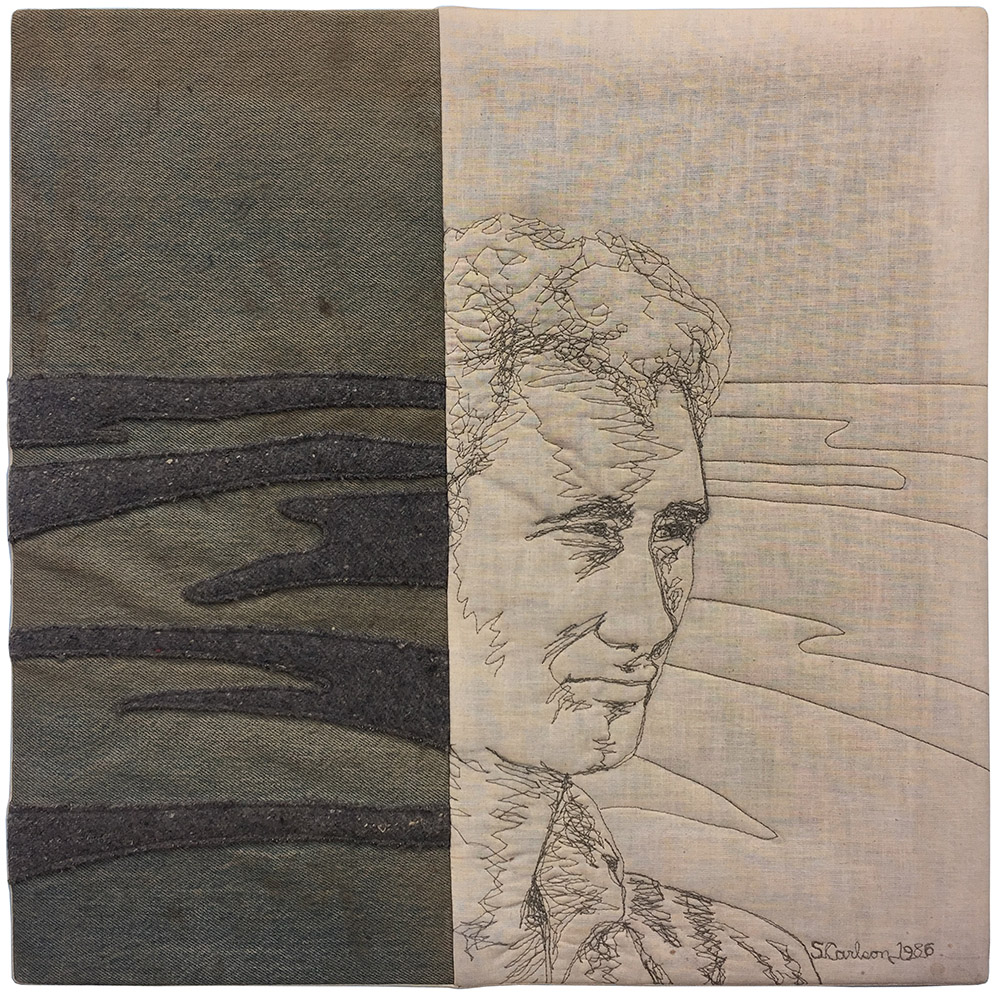
The following portrait of Tom (based on the photo above right) is the first portrait of purely drawing with thread that I had done. The panel of denim is from a well-used pair of work pants, stains still clearly evident. The wool details are from an old blanket. The wavy horizontal lines were to represent the tidal mud flats along the shore at the wharf. I was happy with this first try at stitched portraiture.
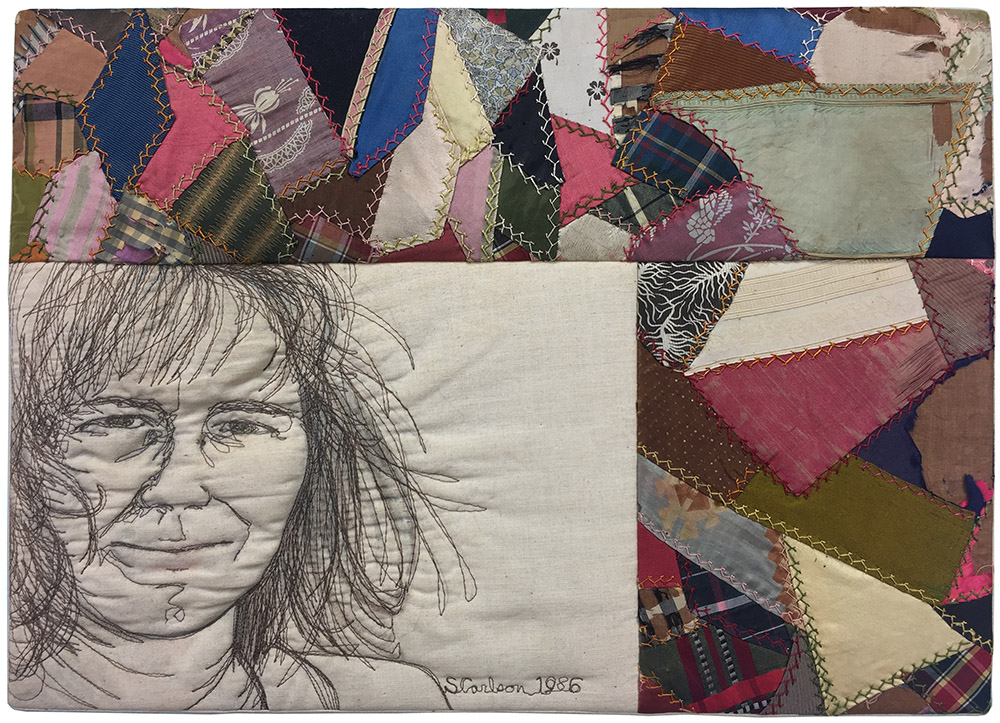
My second attempt was a self-portrait, using a flea-market crazy quilt square for borders. I quickly saw the limitations to this technique if extra batting (trapunto-like) is added. The padding created wrinkles when combined with lots of stitching, as in the hair. It’s not particularly flattering as a portrait. Good thing it was just for me.
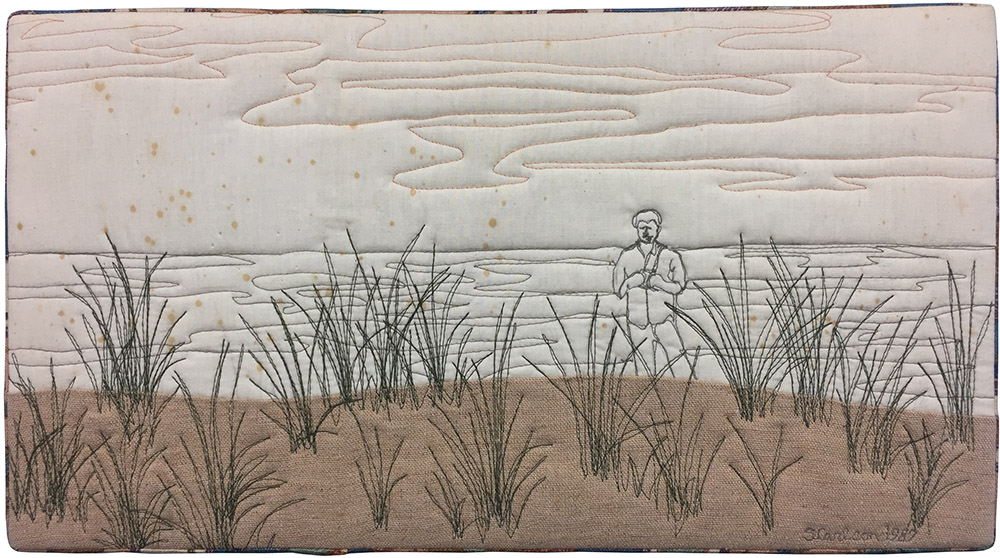
I do enjoy taking photos. I now have a 64 GB iPhone which is constantly crammed with images and videos. But even back in 1986 with good ‘ol canisters of film, I took many, many pictures, so when I returned home to Maryland that fall, I had tons of images to choose from. In the beach scene below, I combined two shots I took that summer, one of Tom standing in the distance on a beach and another of a sand dune. I added a linen-like fabric in the foreground as part of the image.
Around this same time, I also stitched the afore-mentioned wharf scene at the beginning of this post. That image is very similar to one I drew to be used as an engraving on Tom’s grandfather’s headstone. Tom’s dad’s boat can be seen tied up at the wharf in the original photo below. Years later I created a portrait of Tom’s dad, Dain, when I started to experiment with the technique of fabric collage.
But back in Maryland and recently finished college, I had been creating and selling my work at shows and small galleries. I combined the thread drawings with bits of salvaged quilts.


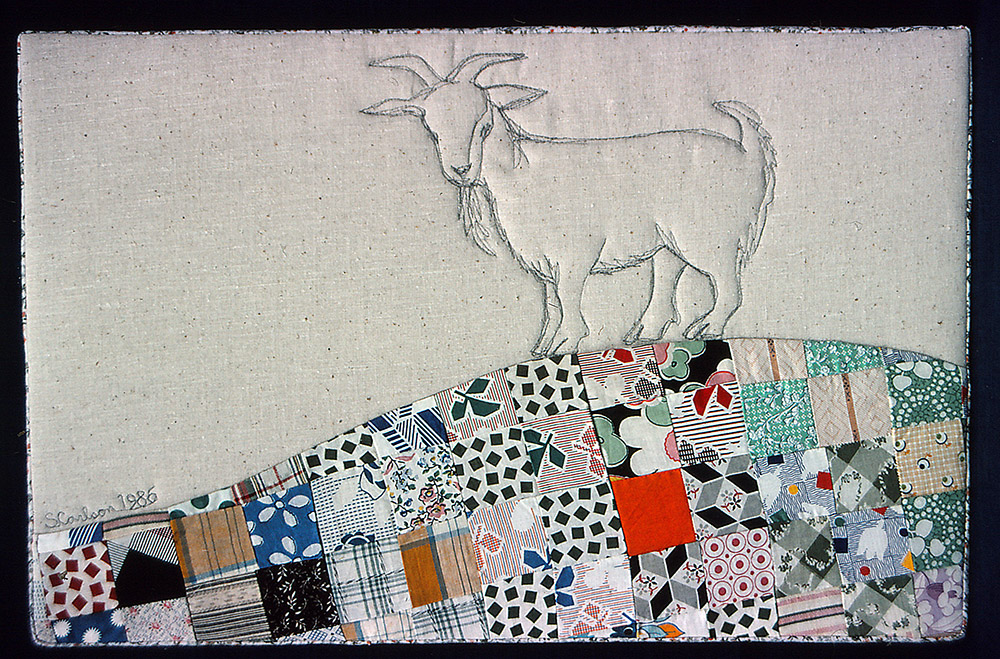


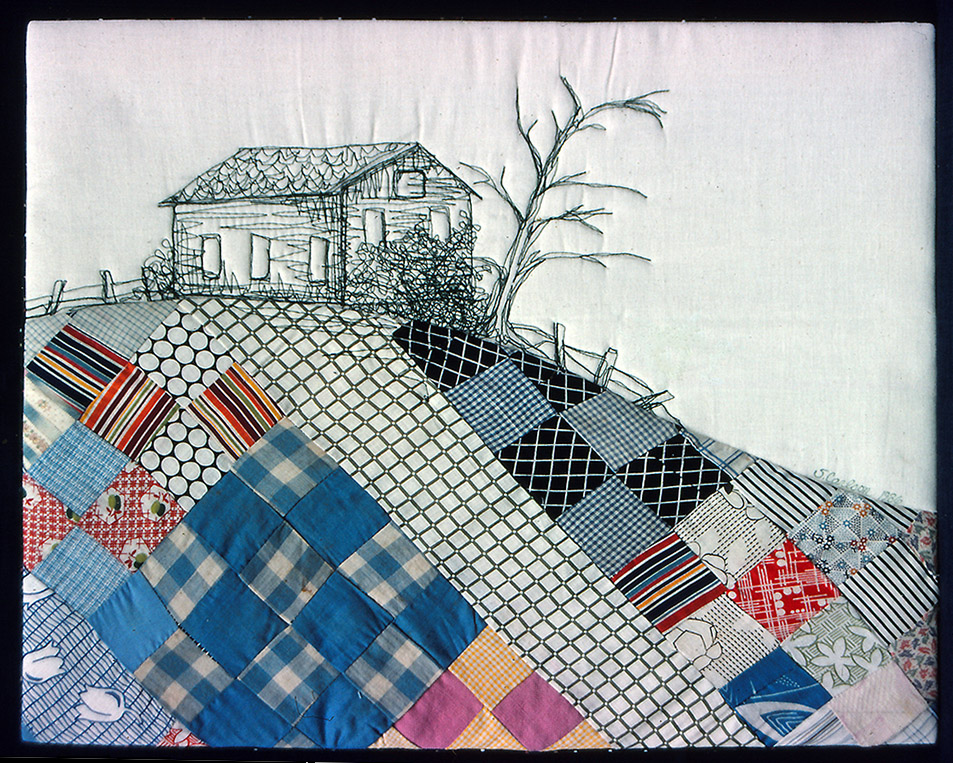
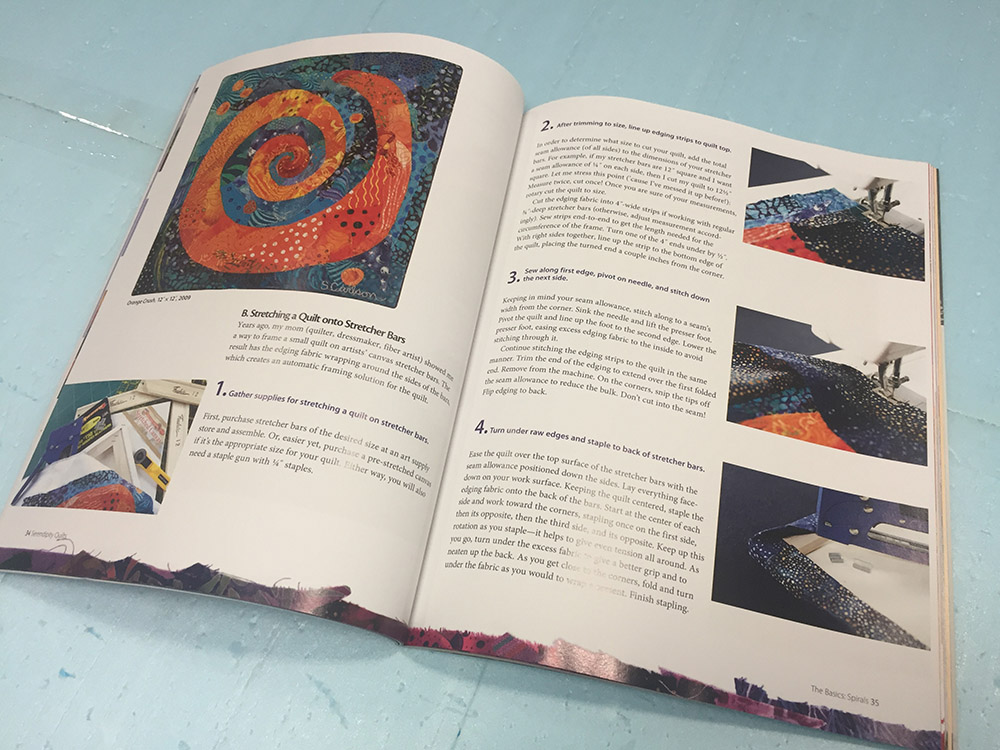
All these small quilts were finished off with a technique that my mom, Meta, taught me. It involved sewing a continuous edging to the quilt top that would then fit around a wooden stretcher frame and be stapled to the back. This gave a very neat and tidy “framed” effect and eliminated the bulk that would happen if the quilt itself was wrapped around the frame.
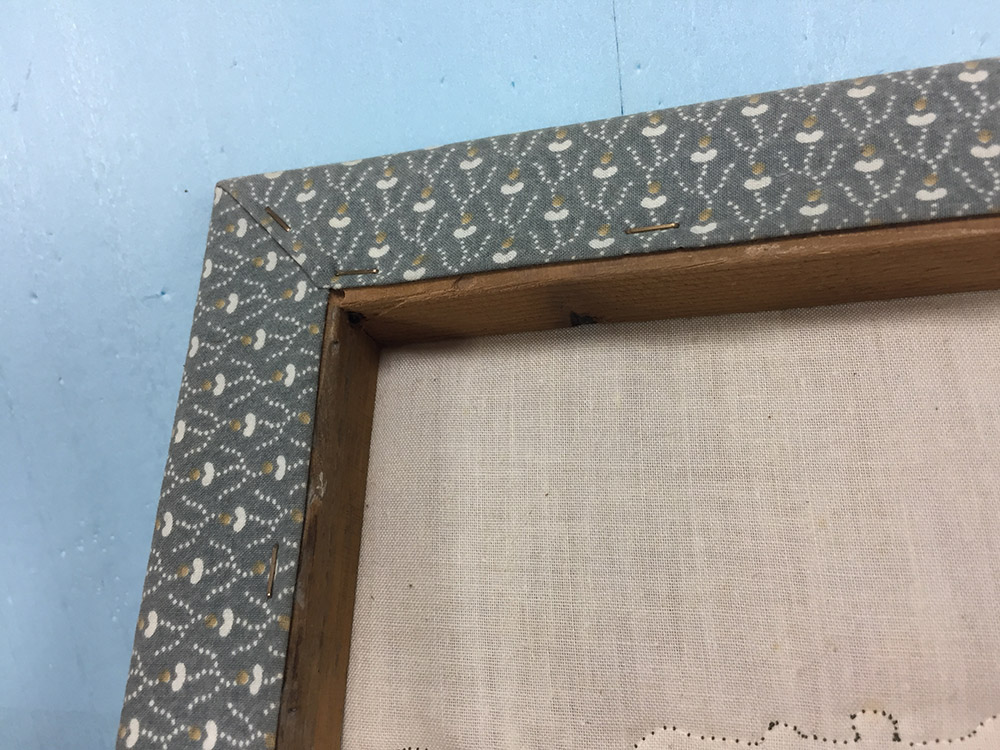
I demonstrate this finishing technique in my book, Serendipity Quilts (below) and also as a video in my Online Fabric Collage Master Class.
Moral of the story? Jumping into things, like I did with thread drawing, doesn’t always work out, but it’s often worth giving it a try. I think it’s ok if there’s some gaps in your knowledge. Sometimes the fear of not knowing all the steps or “how to do it” keeps us from trying new things. And you never know where they’ll take you. For instance, I never even thought to be afraid of free-motion machine quilting, and I’ve been enjoying it and expanding my skills with it for more than three decades now.
And as for my young Maine guy? When we met at the doorway of that wharf, I didn’t know I was looking at 32 years (and counting) with him. I didn’t know where it might lead, so there was no pressure to make things perfect. I was just enjoying the moment. And I still am.
Hi susan it is so nice to read of your adventures every week ,I love your work , and your book is fantastic ! I had a copy sent to me here in Italy and can’t wait to try .Have a good weekend Ciao Margaret
Congratulations on love blooming again and again Susan!
Thanks for sharing you and Tom’s love story and exploration of new beginnings. Moving to a new state and exploring a new area, potential love mate, and new techniques crested into a tsunami of creativity. You are still creating waves and stimulating creativity in others. Thanks for sharing your techniques and unique artistic views. They continue to inspire and create ripples!
Working, rippling, and playing,
Sharon Steele
Pretty and original work. Loved the romantic side of your story!
Excellent blog!
Thanks so much for sharing your story, your photos and your enthusiasm for “just doing it”–experimenting is such a great way to learn. Whether “successful” or not, you learn something that is likely to move you ahead.
Good Morning Susan! Looks like a lovely day to be in Harpswell buying some lobsters.
Love the pieced quilt drawings. Really!!! Got to try that –Joanne
Susan, so enjoyable to read about your starting out years and the story of you and your husband. I love your starting out work painting with thread and the patchwork connected to them. Having driven through Harpswell Maine I can see why you moved up there. Maine is just an awesome state and we try to visit up there as often as we can. Awesome blog this week.
Hi Susan,
Loved the story and seeing your early works! I’m sure when people see your amazing collages, they think you just sit down and put one together not thinking about the years and years of trial and error and experimentation with so many different techniques that you discovered. Having taken your classes at the QU show in Virginia last year, then the incredible week in Harpswell at the retreat this past June has given me so many ideas to work with, and taught me so much — I’m ever so grateful that I’ve had the opportunity to learn with you! Well, my Saturday morning ‘Susan-time’ and my cup of coffee are just about finished, so off to the sewing studio to work on my latest project. Have a good day!
I love seeing those thread drawings!! Thanks for sharing, they are really neat.
Oh my gosh, I have just started thread sketching. I love your pieces and this post came at just the right time for inspiration for my work! Thanks!!!
These pieces are wonderful, what a nice “scrapbook” of your early life together.
Thanks for this very enjoyable AND inspirational blog post! I loved the history, early stitching, your jump-in approach to new techniques, which has served you well. And can benefit us, too!
That’s exactly how I started free motion stitching – just jumped in. I wanted to be able to write sayings on fabric and then frame them. It was in the 80’s and I had no fear. When I started quilting 20 years later, I had no fear of free motion because it was so much like what I had done years before!
Thanks for sharing this wonderful blog with all of us Susan. I love your spirit, your creativity, your sense of humor ~ I’m delighted every time I see you in my inbox! Happy Anniversary to you and Tom! Bless both your hearts!
Thanks for sharing your story.
There is something to be said about being a beginner and not knowing what you’re getting yourself into. Thank you for sharing two powerful examples.
Wow, these are amazing, I love the combined style of the simple line drawings and the richer coloured quilting, they actually look quite modern!
I love how you weave the personal with the practical. It makes for an interesting, entertaining read and gives wonderful background to your artistic growth.
What a great story!! I love seeing your early beginnings, and to see where it led. I’d better get off my fear of being perfect and get to work. I doubt I have 32 years left!!! But I have had a good Texas guy for about that long, so all is not lost!
Wonderful story, thanks for sharing.
Your creativity and artistry is such a joy for all who have the pleasure to see and admire.
thank you indeed Susan
kindly
marg
I value the article post.Thanks Again. Will read on… http://au09soro.tumblr.com/ – Zelasco
How wonderful to see your earlier works and hear how you started, and then to see where you are now in your artistic journey! And thank you for sharing your early years with Tom! Happy Anniversary!