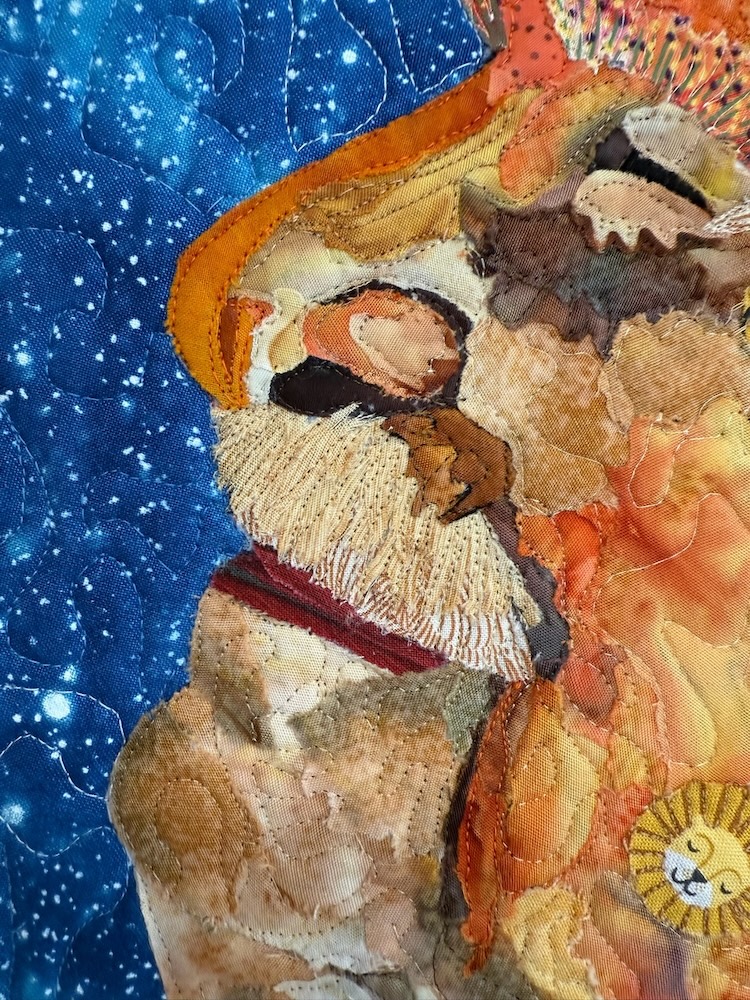
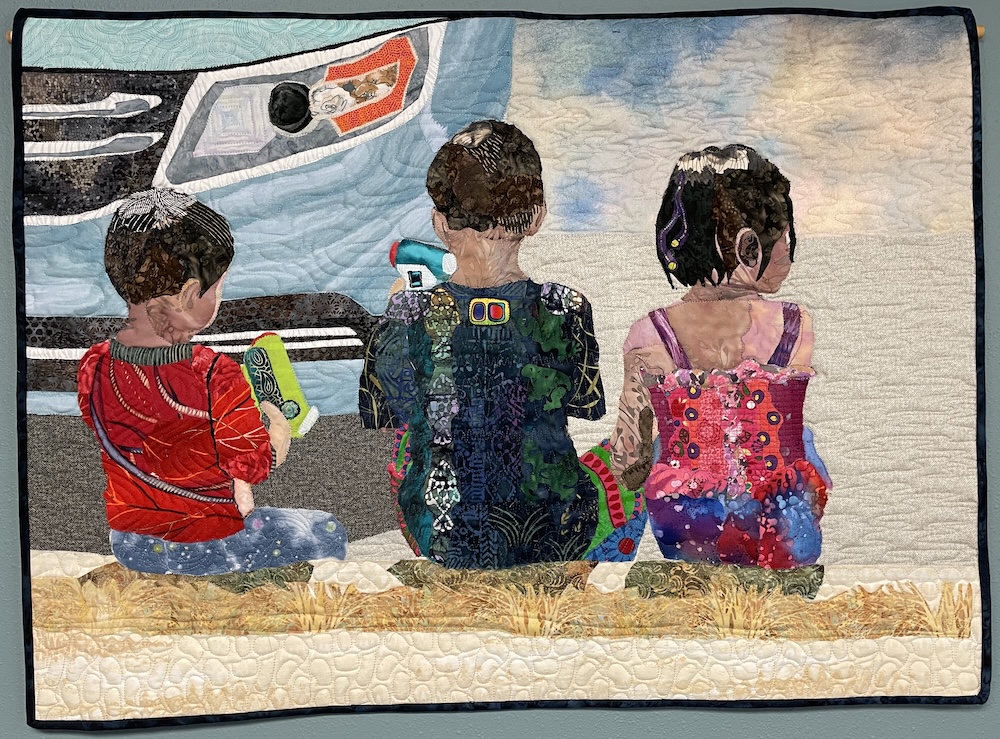
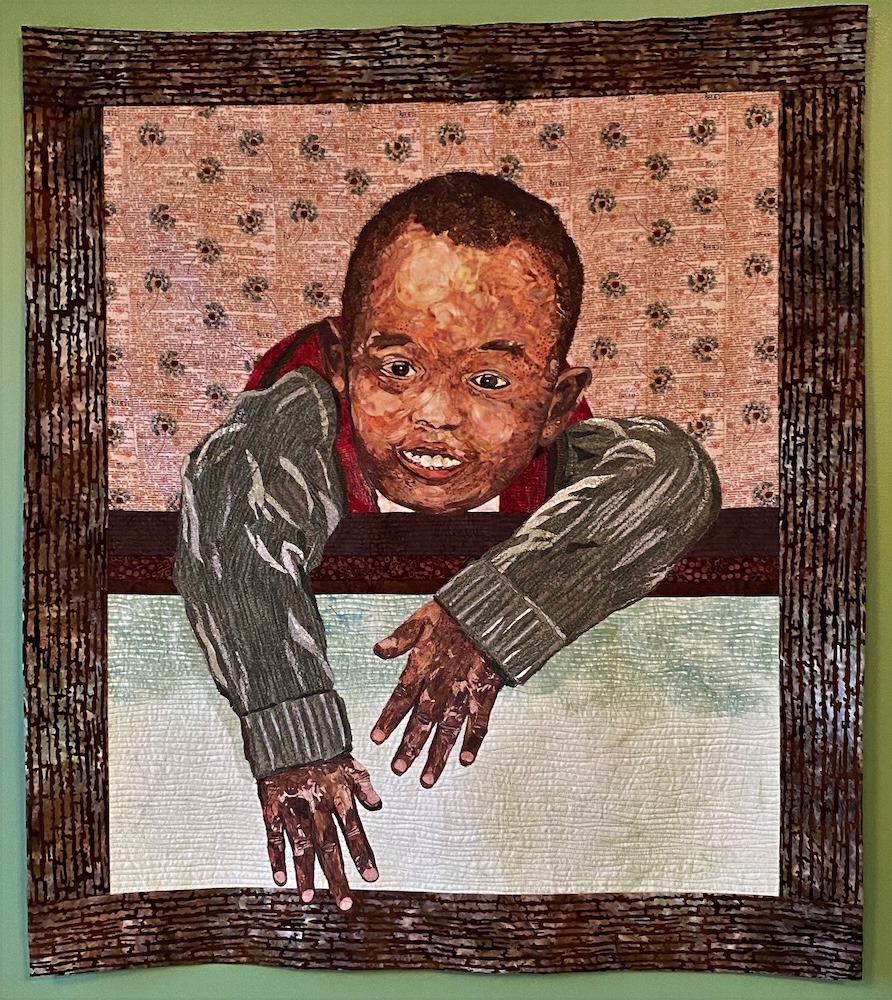
In this collection of fabric collage portraits one striking aspect is how different they all are. Stylistically, of course, they are as unique as the artist that made them. They are also different in how the subjects are viewed. In Pat Eggert’s “Washing the Car,” the kids are all seen from the back. Pat Beaudoin’s husband is seen in profile (“Memories,” detail above). While Jean McCreary’s “Rwandan Son,” is seen straight on. When considering collaging a portrait, these are all things to think about when choosing a photo and pose to work with.
A straight on portrait is usually the most challenging, with the foreshortening of facial features. Jean’s portrait adds a sweet smile and open hands—all extra challenges that she took on for her first fabric portrait—resulting in a beautiful memory quilt, full of hope.
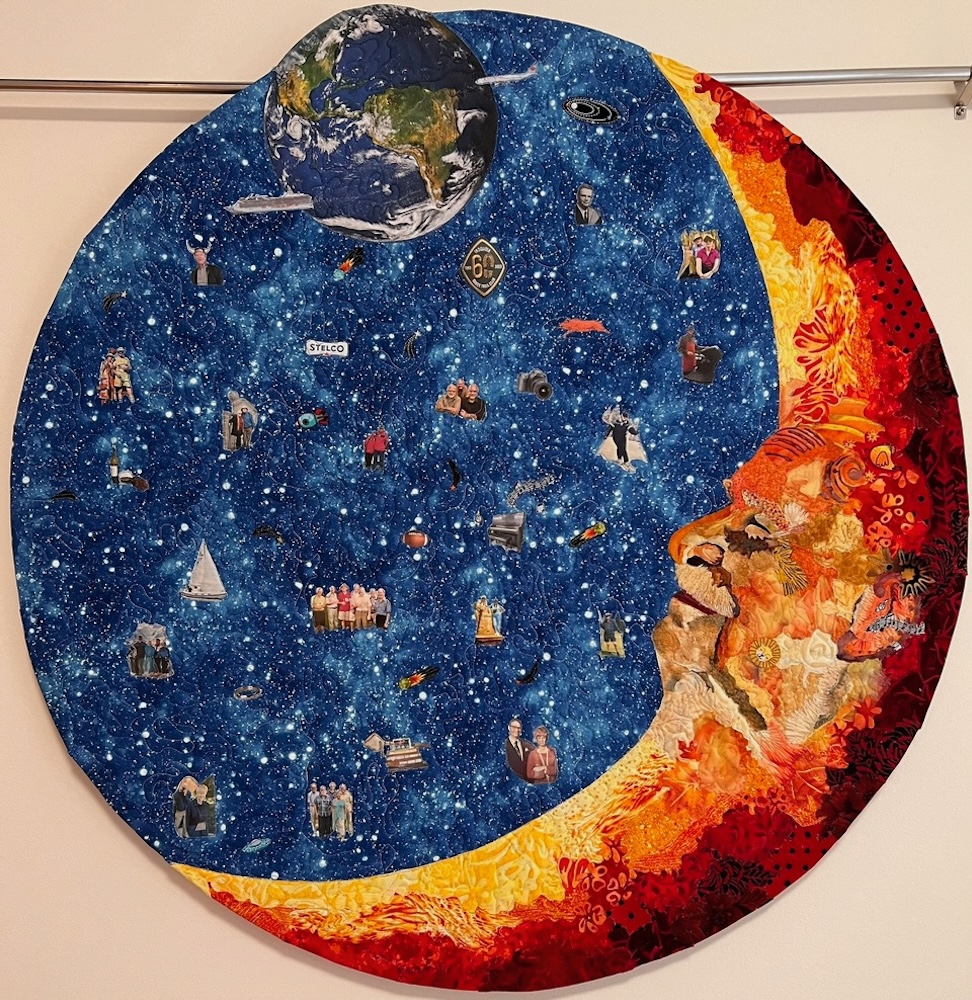
A photo of a face in profile automatically presents a well-defined nose and chin to work with, which is helpful, but any portrait is challenging, especially when it’s of someone near and dear to your heart. Pat took a wonderfully fanciful approach with her husband’s portrait—in theme, colors, and the glimpses she gives us of his life and interests.
A portrait from behind—with no faces—of course eliminates all those niggly issues with facial features, though Pat still had a few ears to deal with. However, the poses of her three grandchildren was all she needed to tell us about a simple but special moment in time.
In the case of today’s Finish Line quilts, each artist’s approach to these portraits was successful and tells us a story of their subjects. I believe when there’s a story behind a piece of art, it creates a layer of depth and interest that’s appreciated by the viewer—even if it isn’t immediately obvious, it still hits us where it counts.
Read on for the in-progress photos and stories behind these lovingly created fabric collage portraits, that these three women have shared with us. Thank you.
Do you have a finished fabric collage quilt (and story?) you’d like to share in a future Finish Line post? Click on submission button below.
Submit Quilt for "Finish Line"
Click on any of the smaller images below, to see them larger and to scroll through each photo gallery.
Pat Eggert
From Pat Eggert of Colfax, Wisconsin:
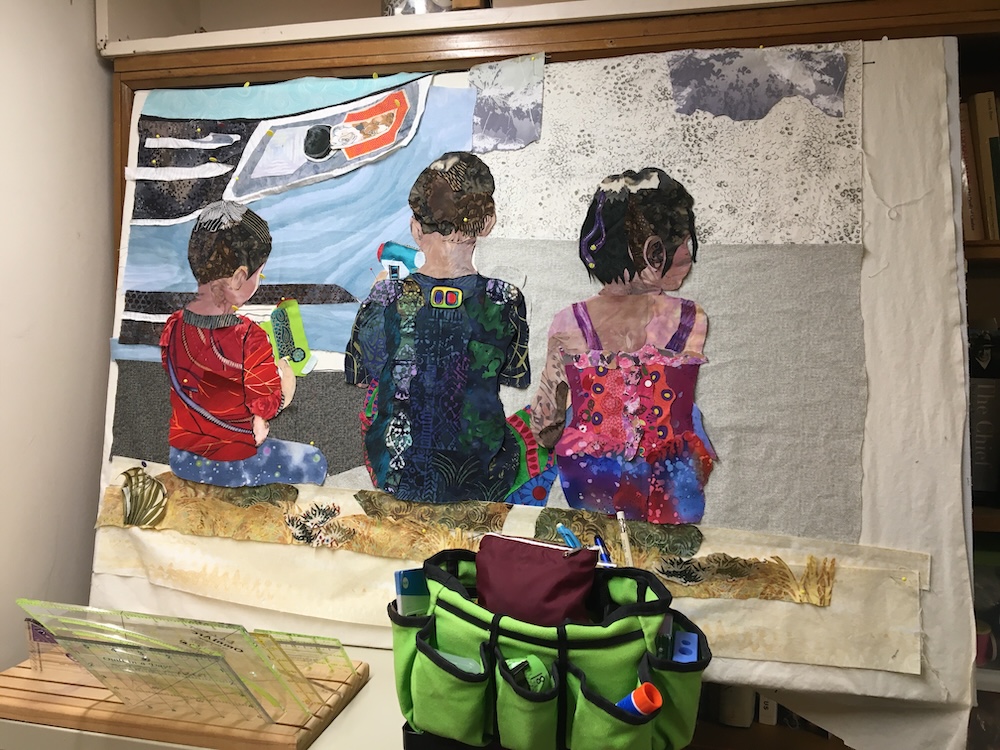
This quilt is based on a photo I took of my three grandkids sitting on the curb outside their house shooting water guns at their van. The class [at Woodland Ridge Retreat in WI] was in 2018, and I finally finished the quilt in 2024 so I could enter it in the Great Wisconsin Quilt Show in Madison.


Pat Beaudoin
To see more of Pat’s fabulous fabric collage work, browse these posts!
From Pat Beaudoin of Dundas, Ontario, Canada:
I was inspired by Susan’s latest quilt of her son and wanted to do a similar quilt featuring my husband. I had never done a person, which I wanted to try plus I had never used any colours other than the actual colour of the subject. My husband has a rare form of dementia, so I also wanted to highlight his life experiences. Most of the “satellites” in the sky are memories of travels, his hobbies, his professional life and his friends and family.


Jean H. McCreary
To see more of Jean’s fantastic fabric collage work, browse these posts!
From Jean H. McCreary of Rochester, New York:
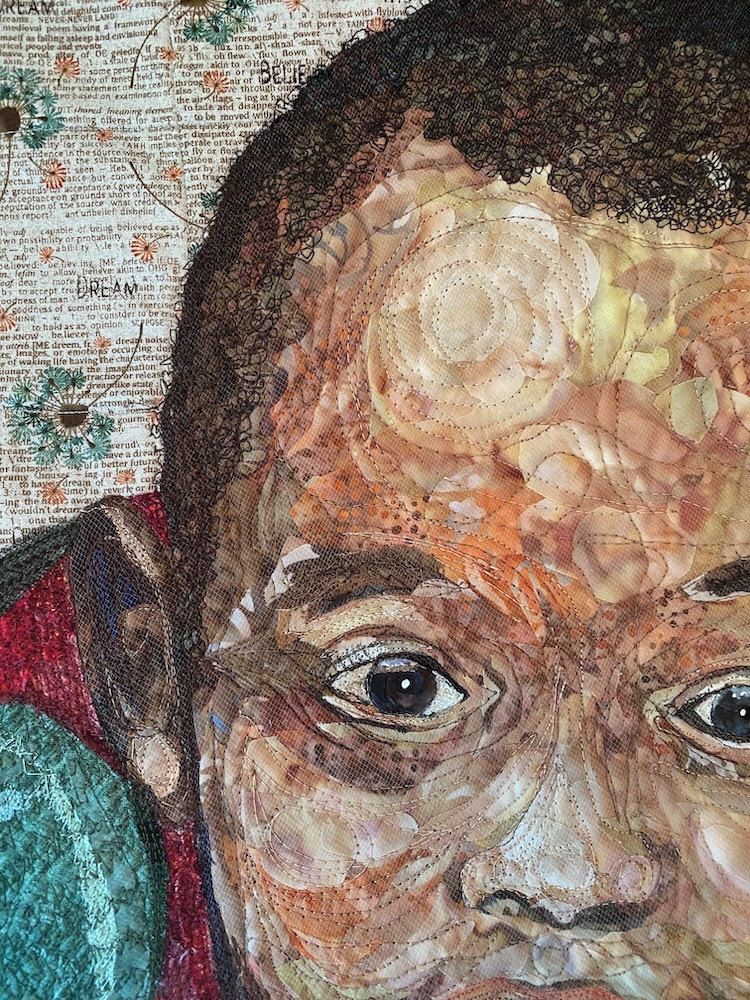
In 2019, my husband and I went to Rwanda. While there, we went to the Genocide Museum in Kigali on the 25th anniversary of the 1994 genocide. It is tough viewing because more than 250,000 of the people killed (mostly by ax) were children under the age of 5. But, we shouldn’t look away from the causes of the genocide and the steps of “truth and reconciliation” that Rwanda took, following in the footsteps of the South African Apartheid experience, to heal the nation. During our trip, we saw this joyous school boy wearing his red backpack and school sweater, smiling at us. It felt healing. It was my first portrait, and I didn’t fully get the shading right, which I later fixed by dabbing the quilt with a damp black pekoe tea bag.
Fabulous quilts this morning! Thank you!
Good morning, Lizzie! I agree! Looking forward to working with you again in Bar Harbor! Maybe we’ll see another fox 😉
Each of these is remarkable! Thank you for sharing them.
You are more than welcome, LeahGrace! And thank you for all the times you’ve shared your artwork with us as well!
All wonderful artworks. Thank you all for sharing. I’m especially pleased to see the idea of using a tea bag after quilting to adjust the color. I’m always tea dying scraps of fabric after drinking tea. This is another great use.
Hi Frances!Yes, a great idea to keep in mind! I have said in the past that it’s never to late to alter a fabric collage—Jean proved it in a way I would not have thought of!
Fascinating. I admire your artistry – creativity.
Linda
Hi Linda! The artistry of these three women IS fascinating! I love how as a grouping, the quilts beautifully represent such different ways to approach the general idea of “what is a portrait?”