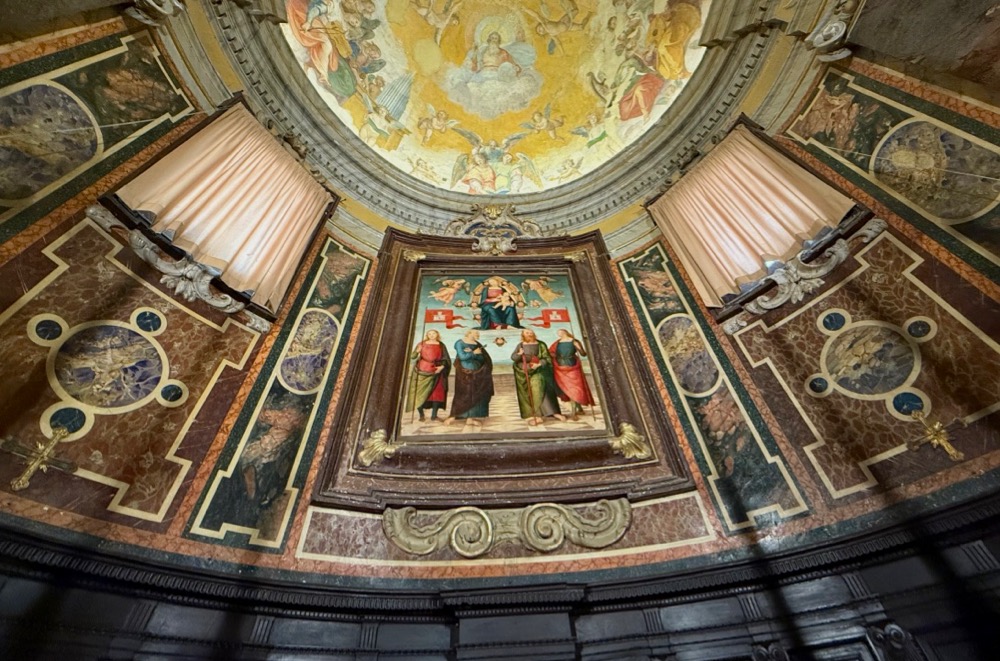
My October trip to Italy to teach a one-week class has been the source of inspiration for a lot of recent blog posts. Italy—the small corner I experienced—continues to inspire me. What I didn’t have the time to cover in previous posts was to sort through the photos and thoughts on how I came home with new inspiration from the art I had seen and how it could (maybe, possibly) influence my own work in fabric collage. And of course I wanted to share those ideas with you my readers.
So, this will be the first “Bites of Inspiration” post, a new blog category. The focus of this post will be the Renaissance art displayed at Città della Pieve Cathedral, an experience I never would have had if not for teaching a Strada Toscana Fabric Collage class around the corner from the cathedral.


This cathedral began as a small church, a “pieve”—first built between the 4th and 5th centuries and what gave the resulting town its name—Città della Pieve, city of the small church. The church since went through centuries of renovations and additions, much of which you can guess at as you look at the exterior.
I walked by this cathedral a few times and didn’t give it a second thought since it seemed unremarkable from the outside. Then the organizer of the class, Pamela Haack of Strada Toscana, gave my class a tour of the interior. I was hooked and made sure to return on my own a couple days later.
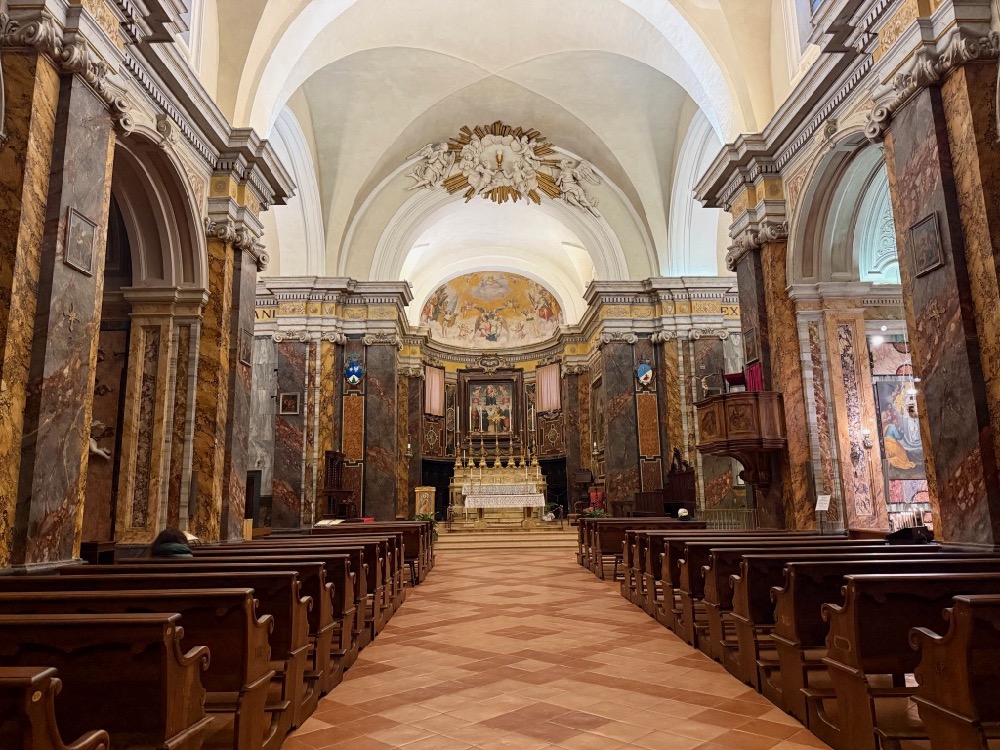
Click on any of the smaller photos to enlarge and to scroll through the photo gallery.


Pamela called our attention to the marble surfaces. Except they’re not marble. It’s all paint—faux marble and inlay, even the carved ceilings and decorative trim—I was captivated by the artistry of the walls and ceilings, columns and pillars, the altars and steps. I wonder if painted wood, even if we don’t know it to be, gives a warmer impression of a space than real marble would?
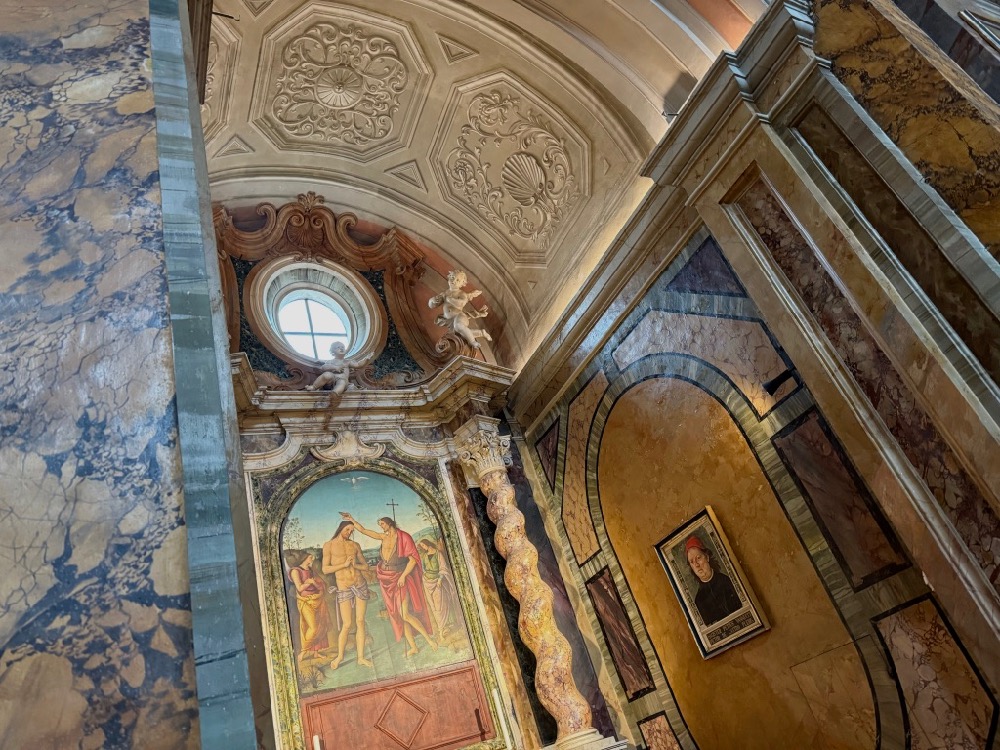
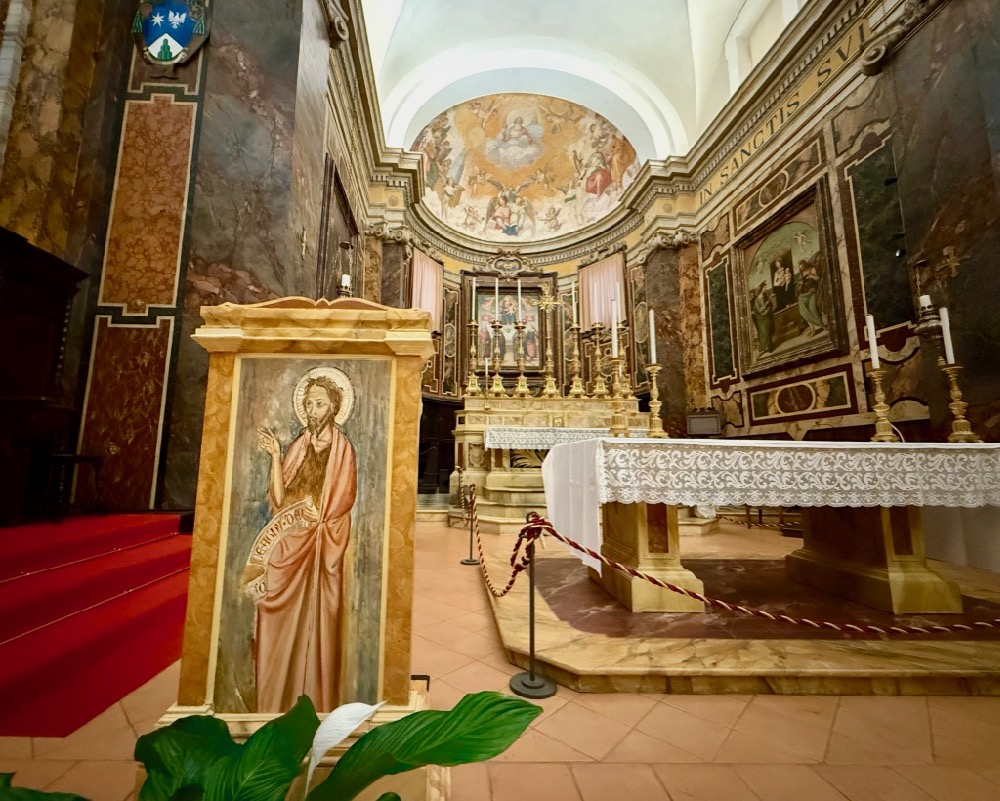


Pamela talked about the transition from Medieval to Renaissance styles of art. I look forward to hearing her explanation again with next year’s class, since my attention strayed to all that I was seeing. I think I’m relatively safe to say that the painting on the pulpit, above, is an example of Medieval art. In relation to the figures in the painting, below, the figure above does not have much roundness or form and the background is a flat color.
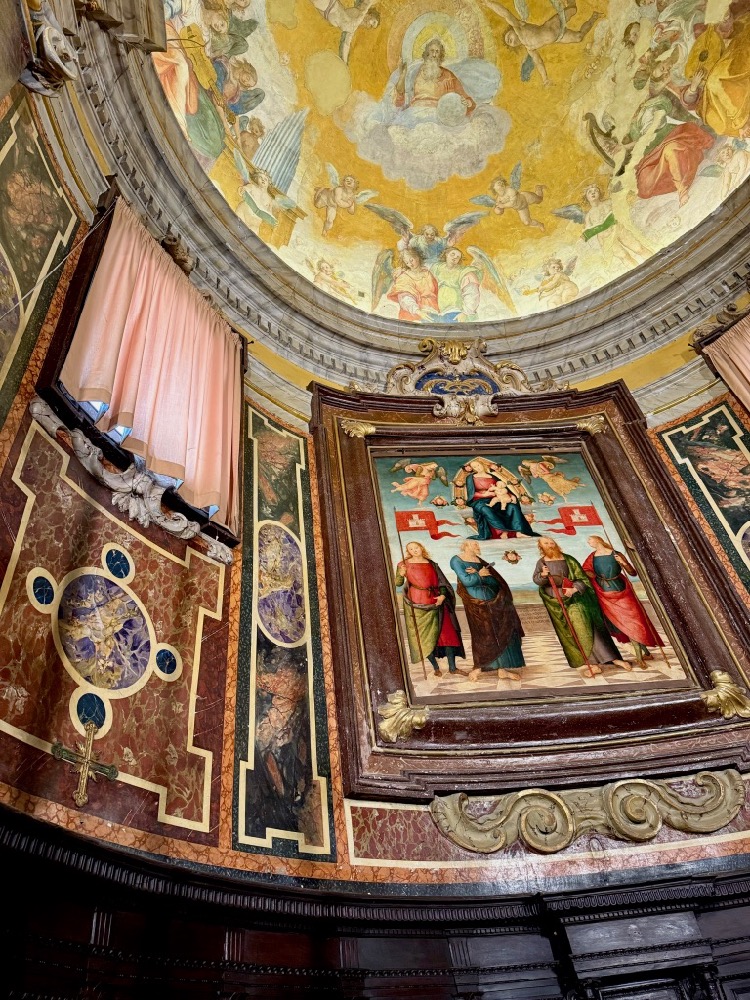


Pamela had us look at the feet—the feet of Perugino’s saints, above left, and the feet of the saints above right, in a painting attributed to one of Perugino’s students. I placed these paintings into a photo gallery above, so you can click on one of the images to enlarge both and be able to scroll back and forth to compare the feet. They’re almost exactly the same. But, as Pamela pointed out, that’s how students learned, by copying what others had successfully done.
So I tried to remember to take photos of other artwork I saw in my travels that had examples of well-defined feet, hands, hair, fabric folds, background ideas, and other aspects of a subject that perhaps my students could learn from (hands especially, right Grace? 😉 ). All are ideas for future “Bites of Inspiration” posts.
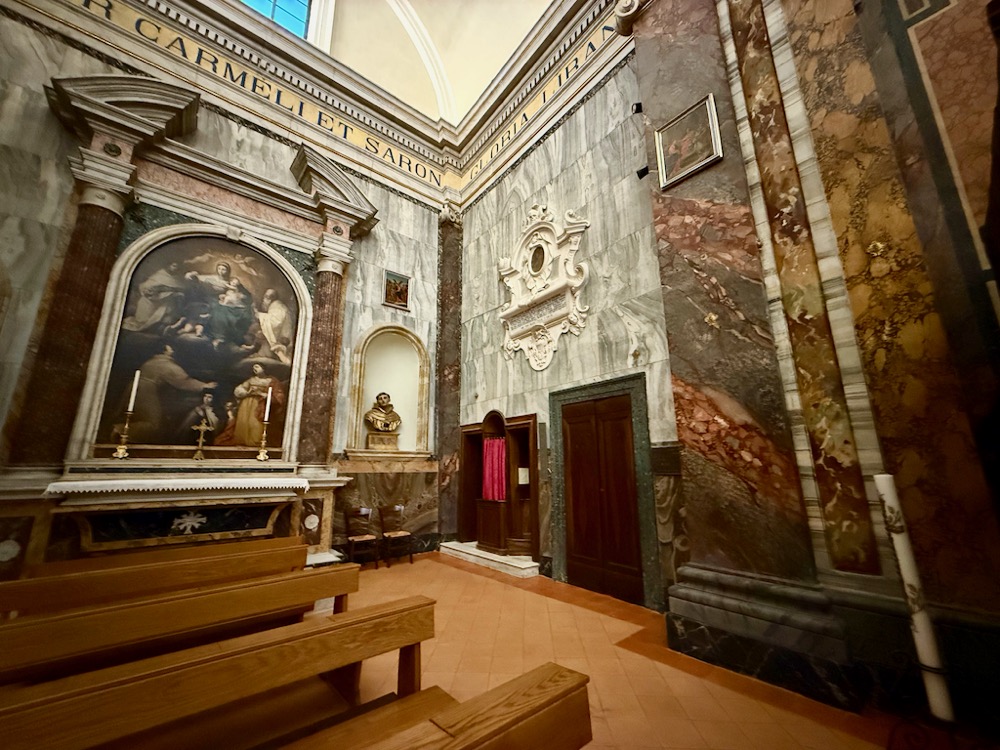


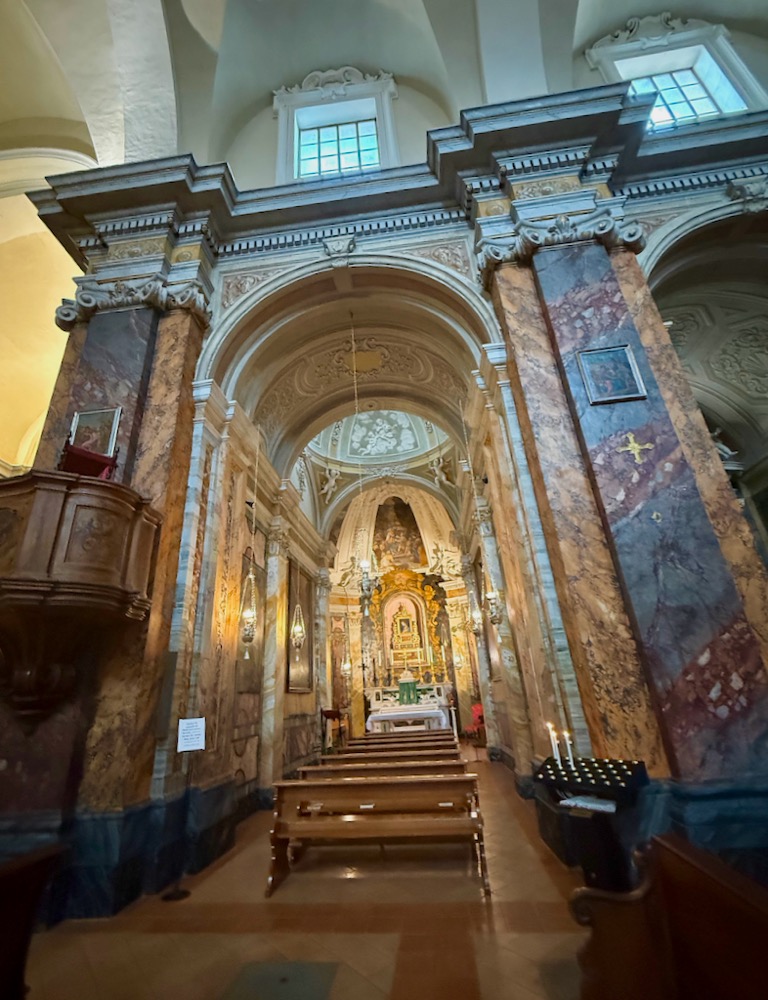
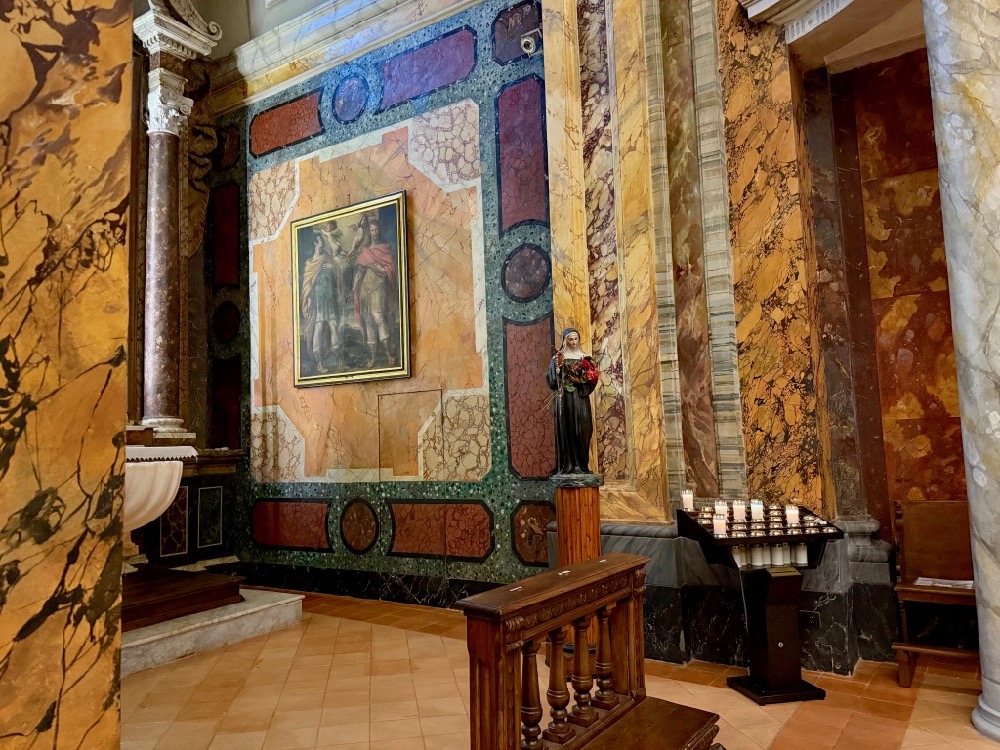
Now that I’m home, I feel inspired to play with my art medium of choice—fabric— with all its own color, pattern, and visual texture. Ciao!
Next Year’s Return to Città della Pieve with Strada Toscana
I will be returning to teach at this inspiring location next year in October of 2026. For more information about that trip or to register, please visit this link.
Serendipitous Fabric Collage: Fantastical Fish of Tuscany—Pesci Fantastici di Toscana
October 19-24, 2026
Città della Pieve, Italy
FOR MORE INFORMATION