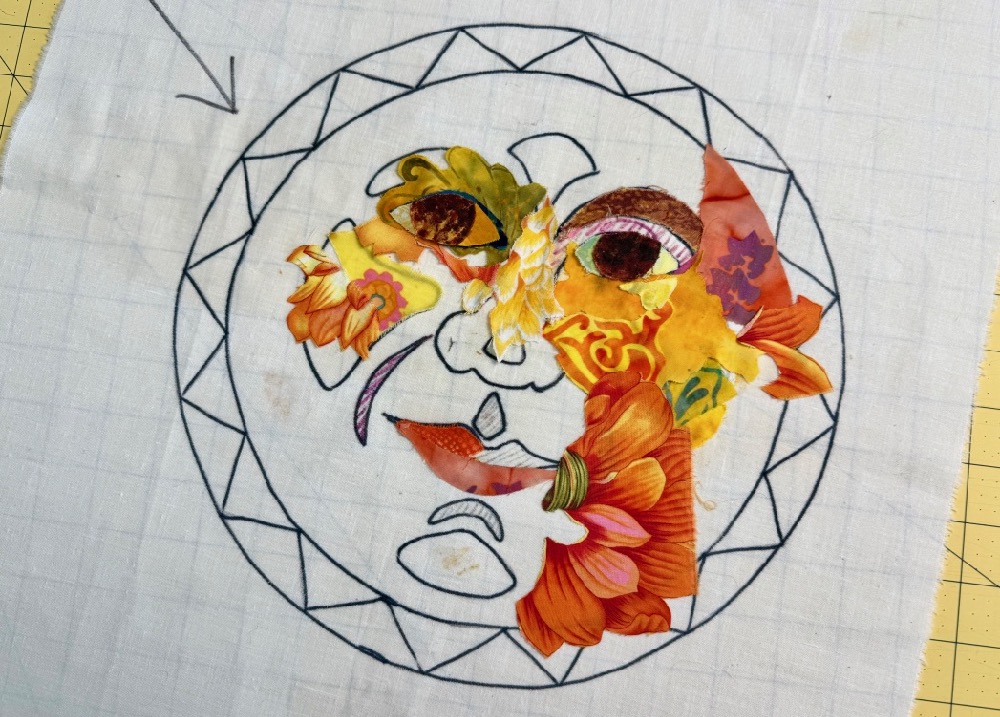
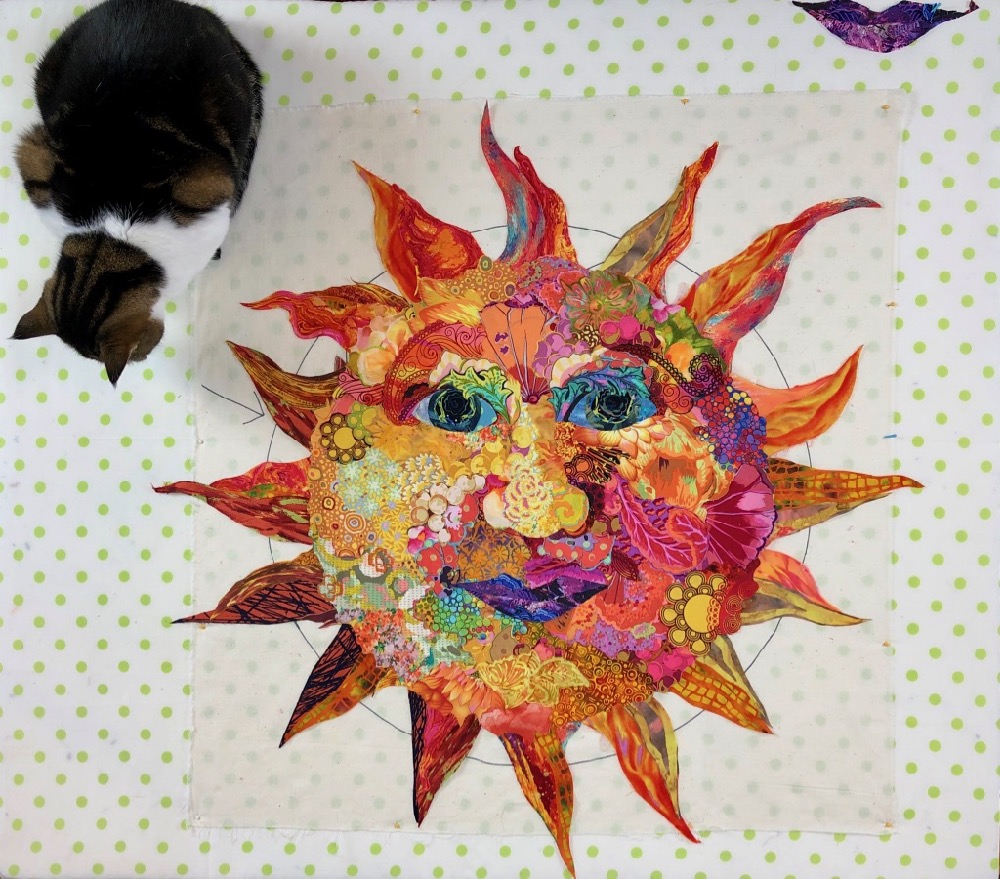
A piece of foundation fabric lies beneath a fabric collage. It’s nothing to be scared about—except for the “messy-scary” stage every collage goes through—see above and below photos to confirm that.
Consider foundation fabric as the “canvas” on which you create your collage. Its purpose is to hold the image together with the help of pins and glue.
This week’s Top Tip:
Don’t let choices about foundation fabric scare you—by the end, it will have disappeared into the depths—of your fabric collage quilt.
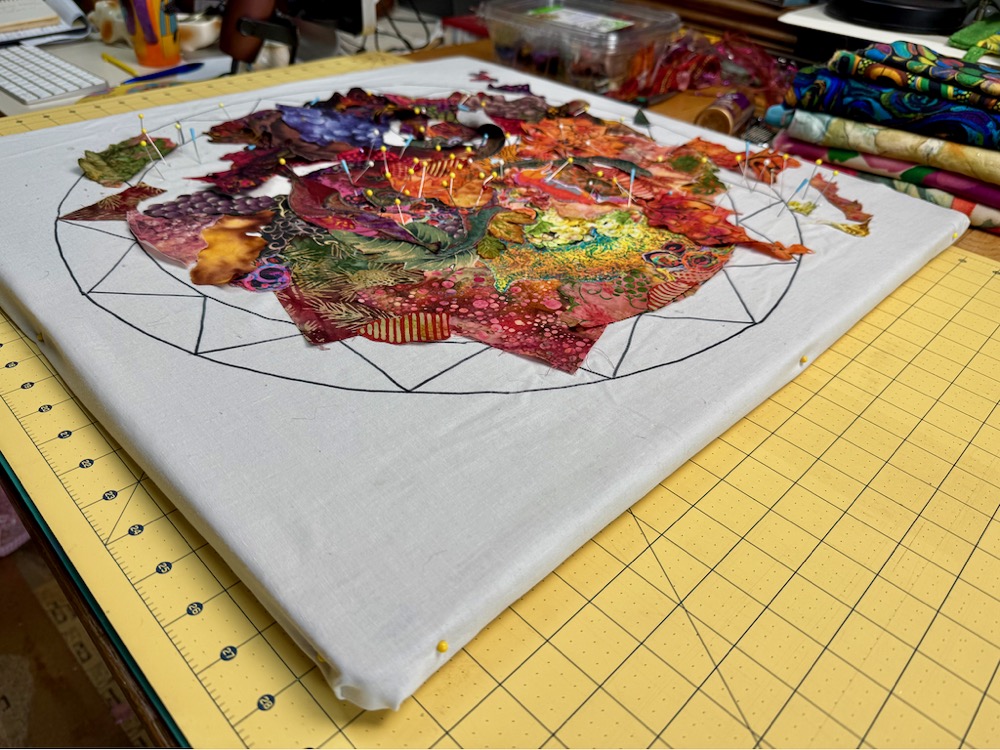
What material to use as foundation fabric is of course a common question for those new to fabric collage. I tell students that they can use almost any kind of fabric with the following traits: it should be light colored, inexpensive, and not too thick.
A cotton muslin is typically a good choice, but you can even use an old sheet. And foundation fabric doesn’t need to be cotton.
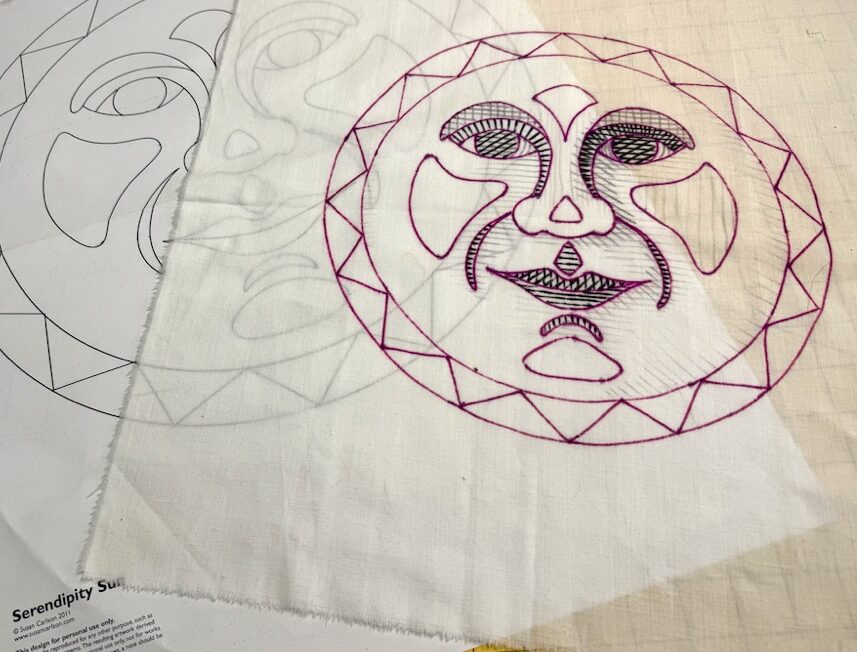
You needn’t be concerned about the size of your foundation fabric either. To start, it only needs to be big enough to fit your subject. Later in the process, the foundation fabric can be enlarged by gluing more pieces or strips onto the edges of the base fabric. No worries.
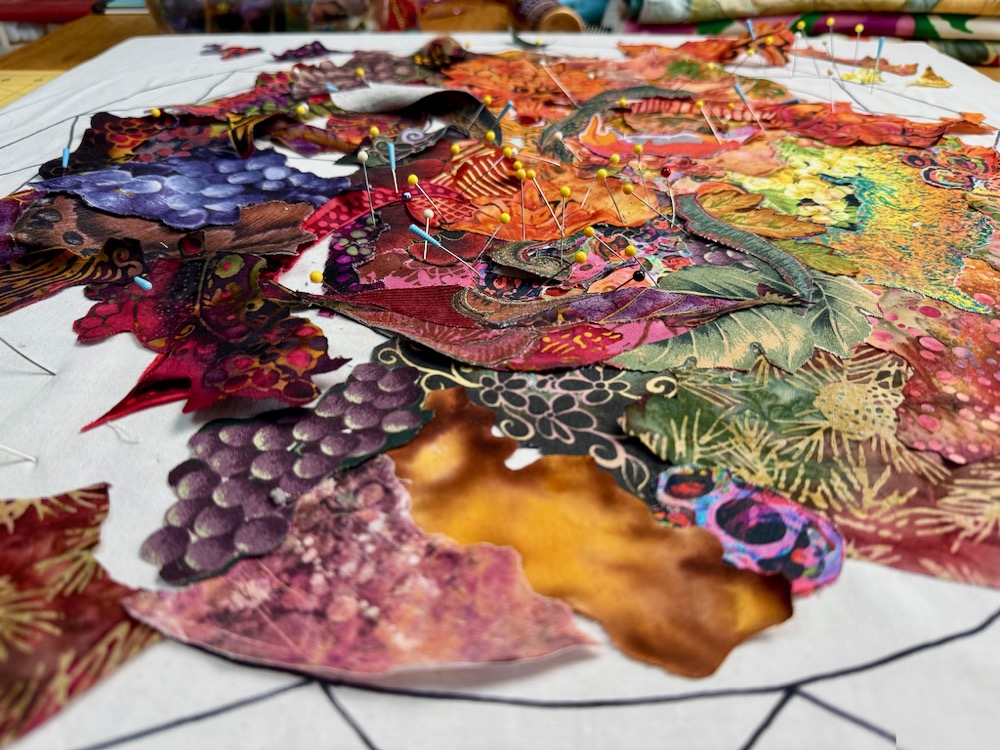
By the time the fabric collage quilt is finished, the foundation fabric will still be there as a base, but sandwiched between the completed collage top, and batting and backing.
This week’s Top Tip:
Don’t let choices about foundation fabric scare you—in the end, it will have disappeared into the depths—of your fabric collage quilt.
So simple, but I wish I’d thought of simply glueing edges to the background fabric…